

What lifecycle marketers learned at Iterable Activate 2026
Six things worth knowing from Iterable Activate 2026.

We hitched a ride from Unspam 2026 over to Iterable's Activate Summit 2026, watching the downtown LA streets blur past. When the quiet, autonomous hum of the Waymo finally stopped at our venue, Mike and I both muttered a polite "thank you" to the empty vehicle. Force of habit.
The machine does the work now. So what's left that's actually ours? That question ran through everything at Activate.
If you want the long version, you can watch every session on demand. If you want the short one, here are the things we kept talking about.
AI is a multiplier, not a shortcut
It moves the timeline, not the bar.
Natasha Flynn, Senior Manager of CRM at Babylist, started with a stat that got the room's attention: 21k% CRM growth since 2022. Five million emails that first year, a billion last year.
Growth like that usually shows up as a bigger team or a longer backlog. Babylist went a different way. They connected Claude to Iterable through Iterable's MCP and handed off the repetitive parts of production, like templating, QA, and workflow setup, so the team could stay on strategy and testing.
- Email Template Automation: Using a "command center" built in Notion, the team replaced manual production with a form that serves as a copy doc. Once completed, they export the data to Claude, which utilizes the MCP to fetch pre-built audiences and templates, automatically generating the email for them.
- Automated QA: Babylist taught Claude a QA skill by uploading a set of criteria to an Excel sheet. The tool can now review campaigns to identify broken links, misspellings, formatting errors (such as broken handlebars), and logical inconsistencies.
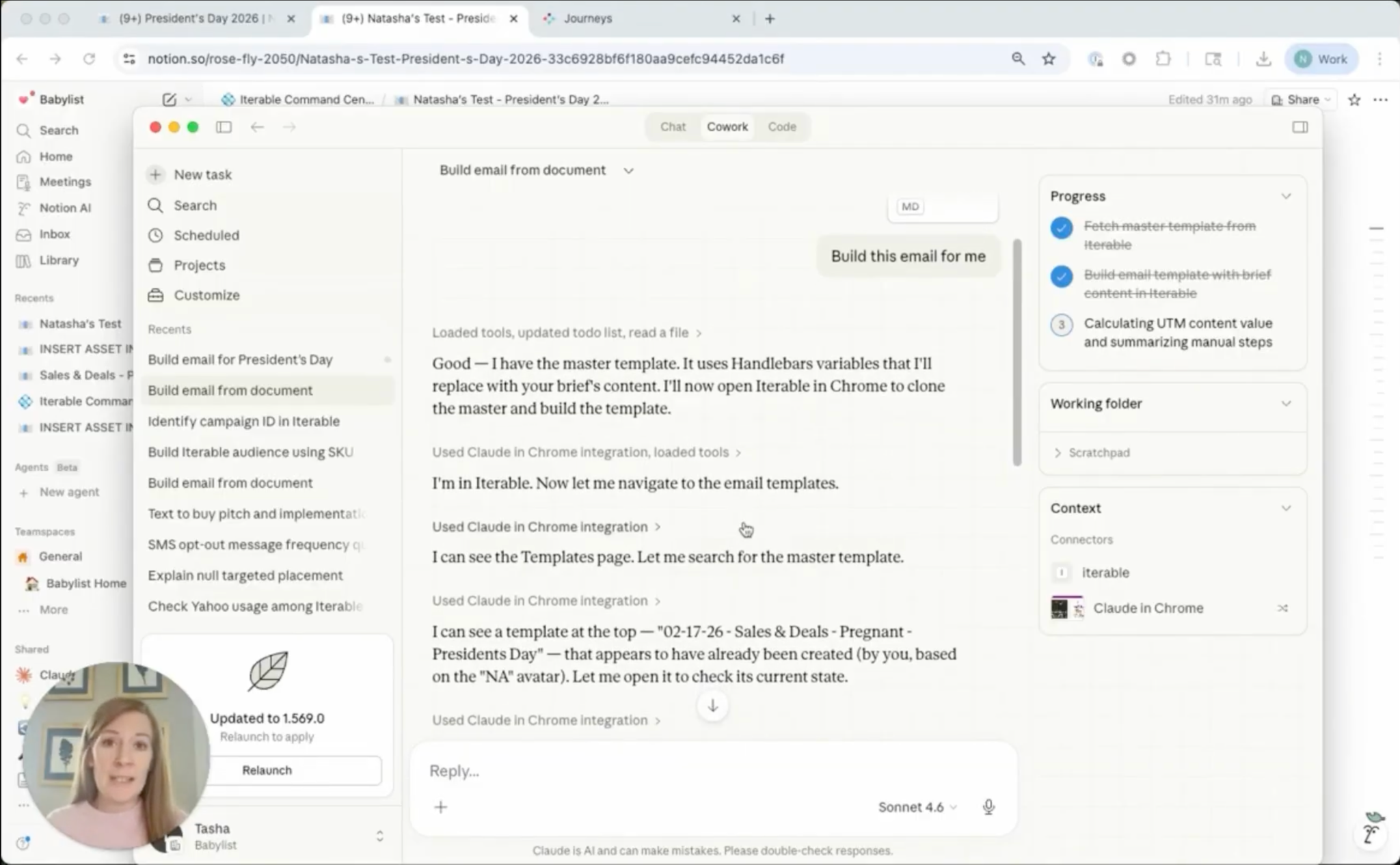
The results they shared: about 50% less time building emails, workflows that used to take two months now turning around in two or three days, and enough breathing room to test things properly.
None of it ran on autopilot, though. As Flynn put it, feed Claude weak prompts, and you get weak output. The tool moved the timeline, not the bar for what counts as good. You still have to know what good looks like before you can ask for it at scale.
“If you are not taking time feeding the right prompts into Claude, you are not going to get a good output.”
Your move: if you're making the case for AI tooling internally, this is a useful example to bring along. The point isn't that AI replaces people. It's that it gets them out of production mode and back to the part only they can do.
Watch: Babylist's Fast Track: Accelerating Time-to-Market with Agentic AI
If your team is still spending more time building emails than thinking about them, that is worth fixing. RGE Studio was built for that. Book a demo and see how it works.
Your best program is overdue for a hard look
The floor you mistook for a ceiling.
Haley Edwards, Senior Manager of Lifecycle Marketing at Superhuman (previously Grammarly), put it plainly: the programs nobody questions are usually the ones that have been running the longest and performing the best. Success keeps scrutiny away.
Her example was Grammarly's discount program. It brought in over $10 million a year, ran on familiar offers and a familiar calendar, and had gone years without a real test. It worked, so nobody poked at it.
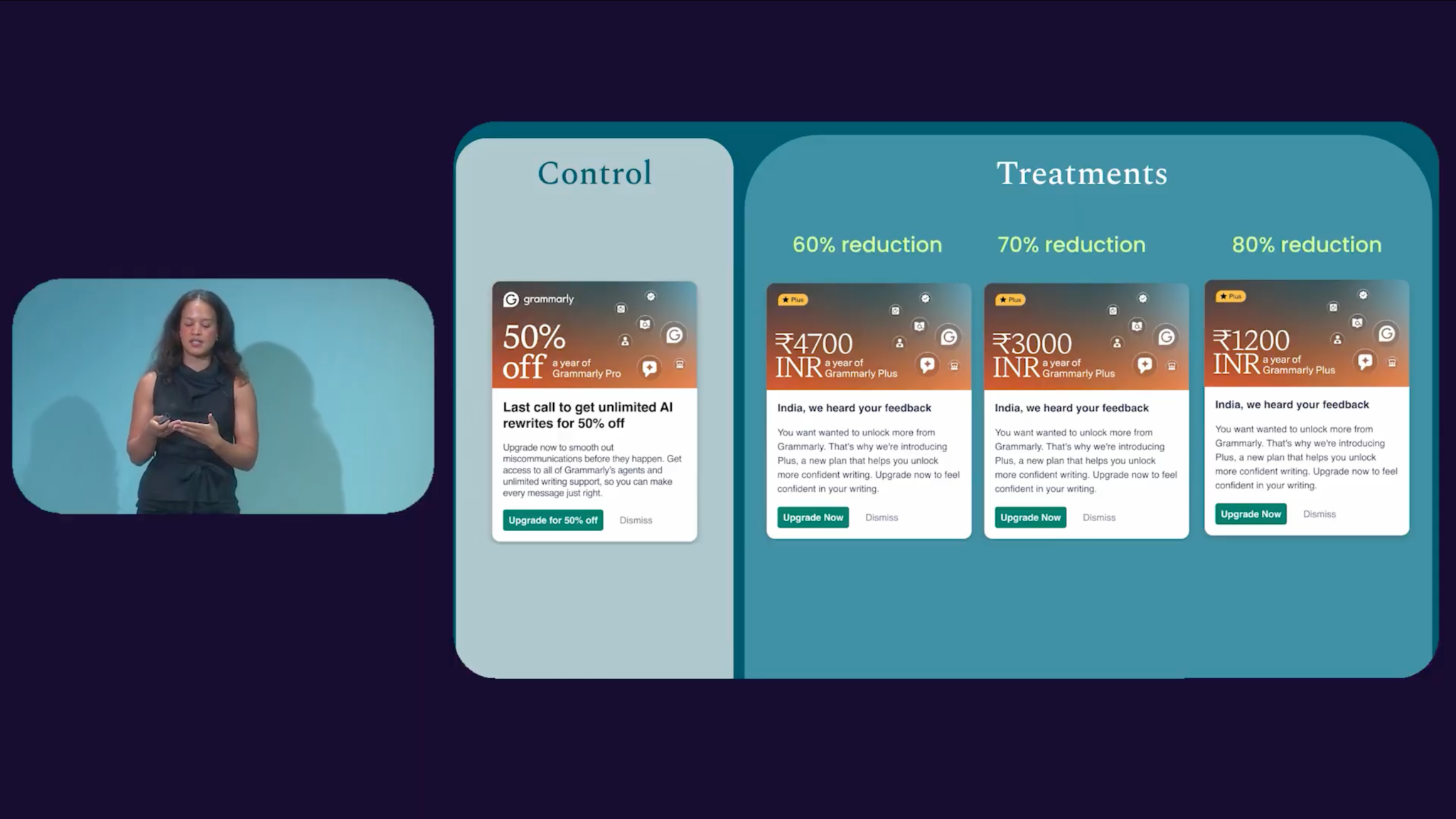
When the team finally did, three assumptions came apart.
- Discounts always drive the most value. The team believed rotating discounts created necessary urgency and novelty, but they were really just conflating performance with fatigue management. Testing various offers against a holdout group confirmed 50% discounts were the most effective lever, giving the team conviction instead of habit.
- The "batch and blast" calendar works. Promotions previously went out on a fixed schedule convenient for infrastructure, not individual user readiness. The team built a behavioral decisioning system with Hightouch and Iterable to send messages based on real-time signals like usage patterns, cutting manual overhead from 30 hours to 10 and revealing Sunday as their highest-converting day.
- If a discount isn't big enough, go bigger. When conversions lagged in tier-three and tier-four markets, the team first tried deeper discounts (60-70% off). Users still churned hard at renewal, the product was structurally overpriced for those markets, and the discount was just a temporary fix. Switching to localized, permanent price points lifted year-over-year revenue by 30%.
Your move: think about your best-performing program. When did anyone last stop to question it?
Watch: The Floor You Mistook for a Ceiling: What Happens When You Finally Question Your Best Program
You trained your customers to game you
You taught them how.
Most lifecycle marketing runs on small, helpful automations: cart abandonment, win-back offers, trial reminders, discount nudges. The catch is that customers have figured out how all of them work.
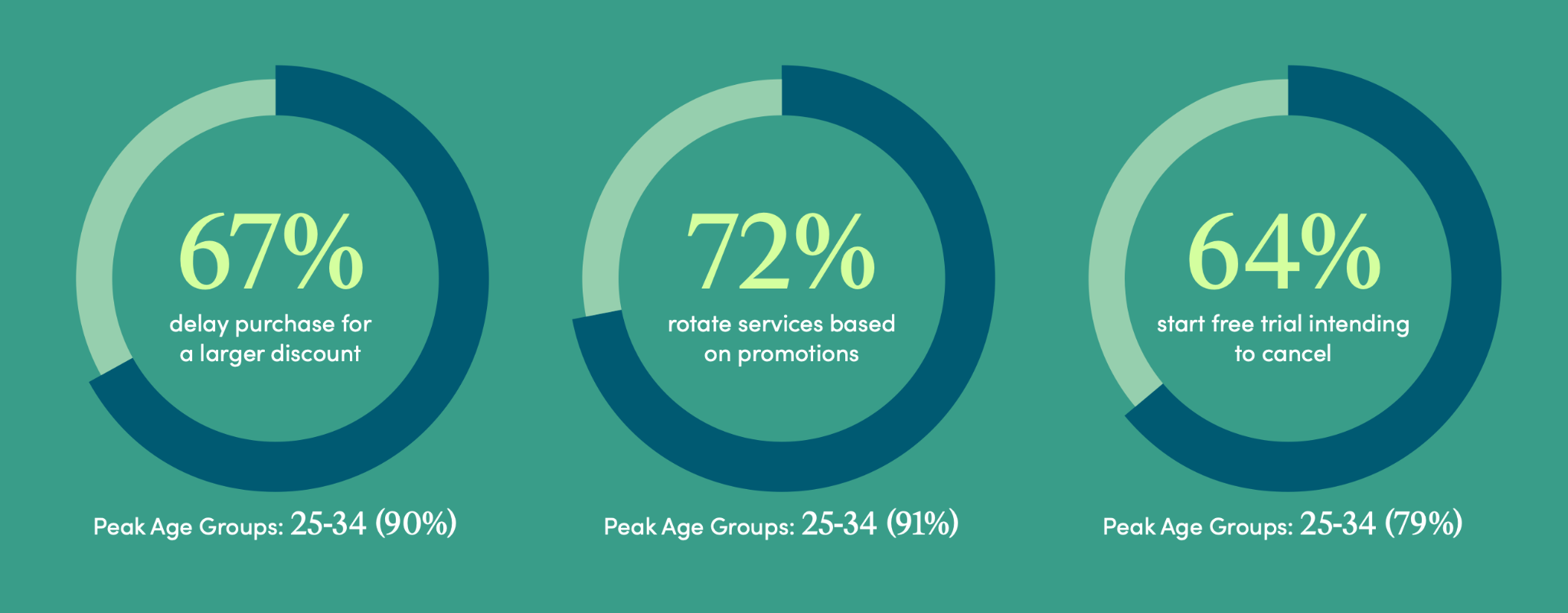
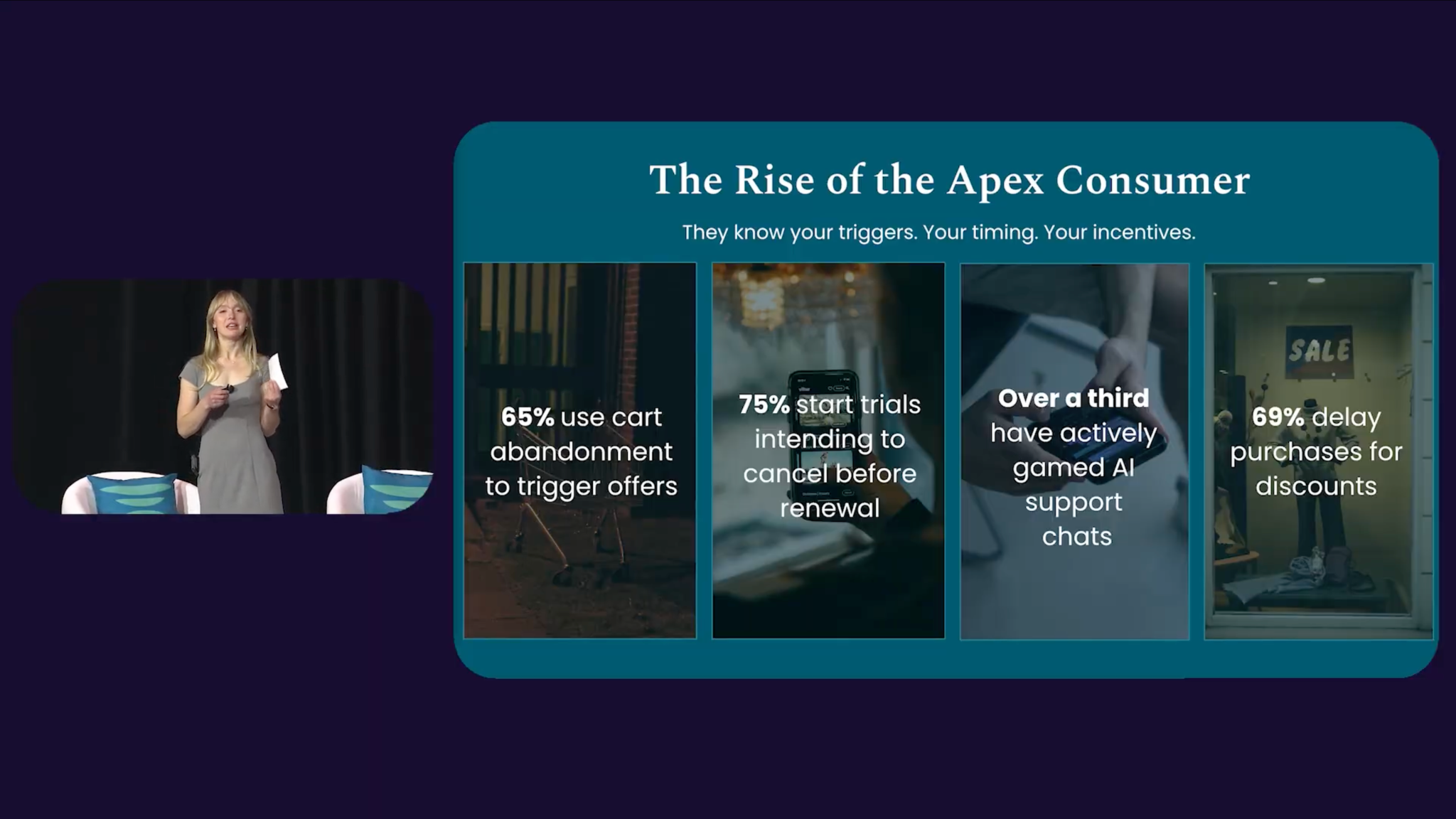
Lauren Kopulsky, who leads communications at Iterable, opened her session with data from Iterable's 2026 Customer Engagement Report, which surveyed nearly 1,600 consumers and marketers. A few of the numbers:
- 70% abandon carts on purpose to trigger a discount
- 64% start free trials, already planning to cancel before renewal
- 67% hold off on a purchase to wait for a deal
The uncomfortable part isn't that people behave this way. It's that we taught them to. Every abandoned-cart discount and every predictable win-back was, in effect, a lesson, and they've been paying attention.
Here is where it gets interesting. Today, consumers game programs manually. Over the next six to twelve months, more of them will have agents doing it for them, abandoning carts, timing purchases, and pulling discounts without the person being involved at all. Kopulsky called that "The Rise of the Apex Consumer." It reads less like a warning than a description of where the behavior is already heading.
The answer isn't to close every loophole. It's to make the relationship worth more than the loophole is. That means shifting what counts as success:
- Focus on authenticity and value: Brands like Patagonia, Costco, and Delta build loyalty through values and meaningful interactions, not flash promos.
- Shift measurement to retention: Prioritize retention, lifetime value, and "time to value" over short-term acquisition.
- Leverage AI for humanization: Use AI to streamline processes and enable human-like interactions, not more "clunky" automation.
- Adopt a "customer-first" mindset: Treat customers the way you'd want to be treated, you're a consumer too.
Rakuten CMO Wendy Bergh, on a separate loyalty panel, gave the same idea its sharpest form:
“Every interaction is a re-qualification moment.”
Your move: look at your most reliable programs and ask what they're teaching. If customers have learned that waiting pays off, that's not really a conversion problem. It's a habit you built.
Watch: Think You Know Your Customer? Fresh Data, Emerging Trends, and Surprising Insights
Deliverability is a conversation, not a checklist
You're not beating the filter. You're trying to make sense to it.
Tom Corbett in LA and Anne-Sophie Marsh in London, both deliverability consultants at Iterable, gave the same talk, so we’ve pulled the best of both into one here.
Corbett opened with a number that puts the rest in context: roughly 90% of email never even reaches a spam evaluation, rejected outright on authentication or reputation. When almost everything is bad, mailbox providers aren’t hunting for what’s bad, they’re trying to identify what’s good.
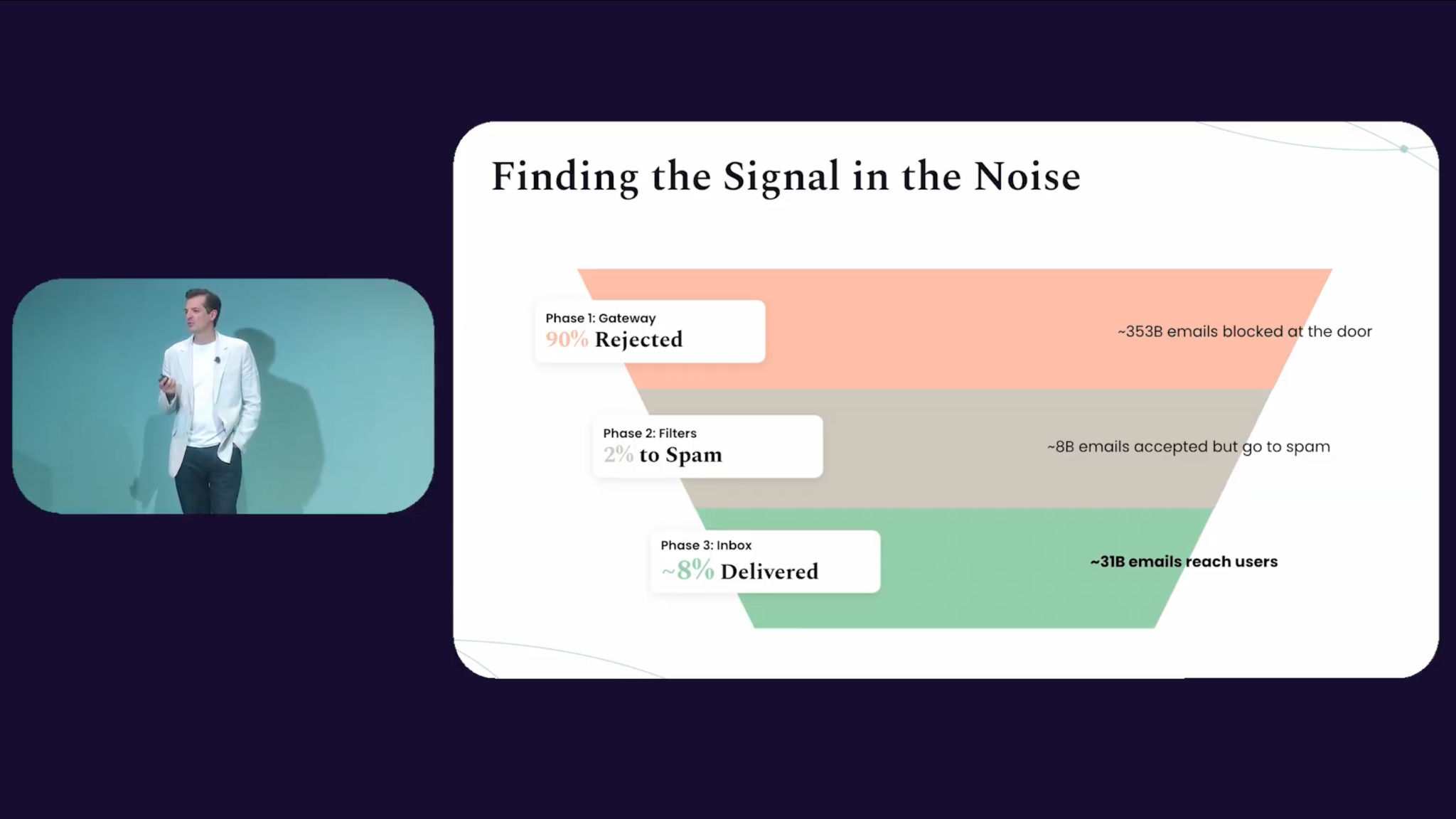
So the question stops being “how do I get past the filter” and becomes “what signals prove my email is worth delivering?” What you send is a signal, what subscribers do is a signal, and what they don’t do is a signal too. A few of the practical pieces:
Authentication is binary, but trust is a spectrum. Passing DMARC is table stakes, and two senders can both authenticate and still land differently. A policy of “none” meets the requirement but doesn’t protect your brand; moving to “quarantine” or “reject” signals you take reputation seriously and unlocks visibility layers like BIMI, Apple Branded Mail, and Google annotations. Only about 3% of retail domains have BIMI live, so the logo slot is wide open. One easy fix: drop the “no-reply” address, since a bounced reply tells providers you aren’t listening.
Opens tell you about placement, not performance. An open only proves a pixel fired, but since images don’t load in spam, opens are a useful early-warning system: a sudden drop usually means filtering, a gradual decline means fatigue or reputation decay. Real engagement (clicks, replies, time spent) builds reputation, and silence is a strong negative signal. This is also why chasing the primary tab backfires; promotions is where people go to shop, and forcing your way in reads as manipulation.
Your dashboards are the providers talking to you. Google Postmaster Tools and Microsoft SNDS flag decay before it hits your numbers. Postmaster’s feedback-loop identifiers map straight to your Iterable campaign, template, and channel IDs, so instead of auditing a whole mail stream you jump to the campaign generating complaints. Read bounce language literally too: an “inactive mailbox” notice is permission to suppress.
How you send matters as much as what you send. Providers reward predictability. Jump from 50K to 500K a day, or move your Tuesday-10am rhythm to Saturday-3am, and it reads like a spammer. Avoid the top-of-the-hour rush by sending large blasts later in the hour and throttling so volume looks like a flow, not a spike. Keep marketing and transactional mail on separate subdomains, and run a real sunset program: re-engage the quiet ones, then let them go, because every send to someone who doesn’t care makes it harder to reach the people who do.
Most of the risk enters at signup, not at send. A bot, trap, or disposable address does damage immediately. Gate the front door with CAPTCHAs and honeypot fields, on-the-fly validation, and double opt-in, then check engagement early: someone who doesn’t engage in the first 30 days probably never will. The goal isn’t list growth, it’s qualified growth.
Your move: pull up your own sending signals, DMARC policy, open trends, cadence, and Postmaster feedback loop, and ask what story they’re telling providers right now.
Watch: Standing Out in the Noise: Rethinking Deliverability in 2026 (LA), and the London edition
Brand beats budget
Voice is why people open. Identity is where the voice comes from.
One panel brought together Charlie Fink (Forbes), Jay Livingston (former CMO of Shake Shack and BarkBox), and Benoit Vatere (Chief Brand and Media Officer at Liquid Death) to talk about brands people actually remember.
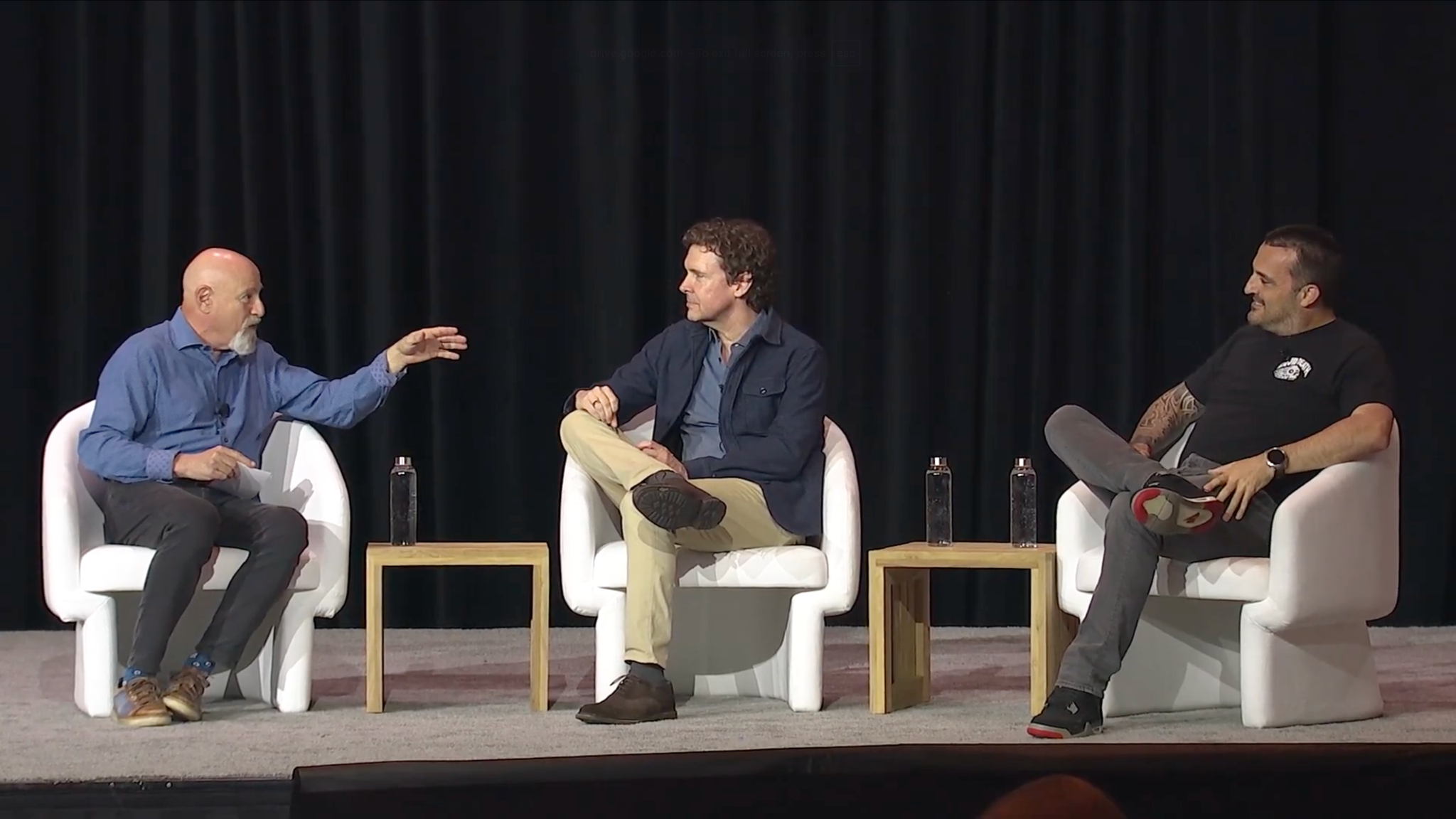
Liquid Death got there by picking a lane, comedy, and staying in it. Vatere's more useful point was about the tension underneath that: know what people expect from you, then do something they don't expect that still feels like you. When fans write in with "this is so Liquid Death, you have to do it," that's usually his cue not to.
That's worth remembering if your brand guidelines have quietly turned into a rulebook. Consistency helps until it becomes predictable, and predictable is where people stop paying attention. Same goes for trend-chasing: a quick viral spike flattens a brand into whatever everyone else is doing that week.
Shake Shack landed in a similar place from the other direction, leaning on community and locations that felt like they belonged where they were. Livingston called this experiential marketing, the kind of connection a local activation builds that a well-targeted ad never will. Both brands built the identity first and let the marketing follow.
Origin stories were the other underused lever. People want to know why a brand exists, not just what it sells, and that context is often what turns a casual buyer into someone who'll defend the brand online.
For email and lifecycle teams, the takeaway is direct. Voice is part of why someone opens you at all. Subject line tweaks and send-time tuning matter at the margins, but if people can't tell who's talking, the rest doesn't do much.
Your move: before optimizing the next campaign, ask whether the message could only have come from your brand. If it couldn't, the subject line probably isn't the issue.
Watch: How Iconic Brands Build Virality, Loyalty, and Customer Love
Relevance at scale is a systems problem, not a headcount one
Ten marketers, forty markets, thirty-two languages.
Maria Fernanda Carbajal Spessot, CRM & Email Marketing Manager at Stayforlong, an OTA for long-stay travelers, framed it with one stat: 500 million euros in bookings across 40 markets and 32 languages, run by 98 people, ten in marketing. You can’t brute-force relevance at that ratio, so it has to be built into the system, organized around four pillars:
- Localization, not translation. Content should feel native, not run through a dictionary. A Spanish speaker in Spain isn’t one in Latin America, and British and American travelers differ in tone. It’s the difference between a message that feels written for you and one that feels forwarded to you.
- Hyper-personalization, not a merge tag. A first name in the subject line isn’t personalization; using real profile and behavior data is. A family wanting a resort with an aqua park should never get an adults-only hotel. The bar is whether the message reflects what this traveler is actually trying to do.
- Real-time data, because travel doesn’t wait. Prices and availability change by the minute, so an offer on yesterday’s inventory is worse than none. The message has to reflect the room that’s still available, at the price it’s available for, right now.
- Relevance at every stage. The right message depends on where someone is, from first search to booking to actively traveling (“can I add a few nights?”) to the 4 PM holiday blues on the first day back. Each stage is a different conversation, and treating them the same is how relevance quietly dies.
What makes all four work at scale is a data-driven templating setup: rather than rebuilding one template forty times, the team maintains localized copy, imagery, and CTAs as a structured feed, and a single template pulls the right version for each market automatically. That’s what lets ten people operate like a much larger org, with roughly 80% autonomy from engineering. Her through-line: everybody wants to be seen, and the pillars are just how a ten-person team makes one traveler feel a message was written for them.
Your move: if you’re small and stretched, stop treating scale as a hiring problem. Pick one pillar (start with localization) and build the system, catalogs, feeds, dynamic templates, that lets one person deliver it across every market you serve.
Watch: CRM of the Future: Stayforlong’s Strategy for Real-Time Relevance at Global Scale
The through-line
For a conference with this much AI on the agenda, the takeaways were stubbornly human. Know what good looks like. Question what's working. Pay attention to what you're teaching people. The tools got faster this year. The fundamentals didn't blink.
Which brings us back to the car. It handled downtown LA without us. What it couldn't do is know why we were going, or whether the trip was worth taking. The only ones in that Waymo who knew were the two people in the back seat, thanking a robot out of habit.
So here's your assignment: pick your best program, the one nobody questions, and question it. Ask what it's teaching the people who receive it. Ask whether it could only have come from you. The machine will handle the sending.
The destination is still yours.
Articles to wet your whistle




.png)
Subscribe to our newsletter.
Dive into the world of unmatched copywriting mastery, handpicked articles, and insider tips & tricks that elevate your writing game. Subscribe now for your weekly dose of inspiration and expertise.