

Small business email marketing tips for Small Business Saturday
Find out why Small Business Saturday deserves its own email, how small brands make it personal, and what a bigger brand can’t copy.

Small Business Saturday falls on the Saturday after Thanksgiving, between Black Friday and Cyber Monday. American Express started it in 2010 to help small businesses find more customers during one of the busiest shopping weekends of the year, and the U.S. Small Business Administration has cosponsored it since 2011. Shoppers are paying attention. In the 2026 American Express Shop Small Impact Study, 88% of U.S. consumers said they’re likely to shop at small businesses this holiday season, the highest level since 2012. By the time Saturday arrives, though, most subscribers have been reading Black Friday emails for weeks, so the reason to choose a small business has to come from somewhere other than the size of the discount.
The Small Business Saturday emails that stand out lean on what being small makes possible, like customers who can vouch for you, a store your neighbors can walk into, an offer you can make personal, other independent brands you can champion, and the people behind it all. Each section below takes one of those, with real examples where we found them, followed by the basics for getting started.
Let your customers make the case
On a day when shoppers are choosing which local business to support, the people who already shop with you are your strongest argument.
When customers do the talking
Testimonials work because readers hear from someone like them instead of from the business itself. In the same study, recommendations from friends and family were the top way shoppers chose which small business to visit. For Small Business Saturday, ask two or three regulars for a single line about why they keep coming back, and, with their permission, add their first name and neighborhood next to it. A quote from someone who lives down the street says something about your business that no product description can.
When advocates spread the word
An ambassador or referral program takes this a step further. Loyal customers get real perks for sharing the brand, and the business reaches people outside its own list through recommendations they already trust. On Small Business Saturday, give your ambassadors something easy to pass on, like a code or a card for a friend who has never visited the shop, so the day brings in new faces as well as familiar ones.
Your regulars deserve something too. Letting them shop before everyone else, or setting aside a small batch just for them, turns their loyalty into a reason to open your email.
Meet shoppers where they are
On a day built around shopping local, many small businesses remind subscribers what that choice means, that local shops hold a community together and that money spent nearby stays nearby. An email that also knows where your subscribers are can turn that message into a visit.
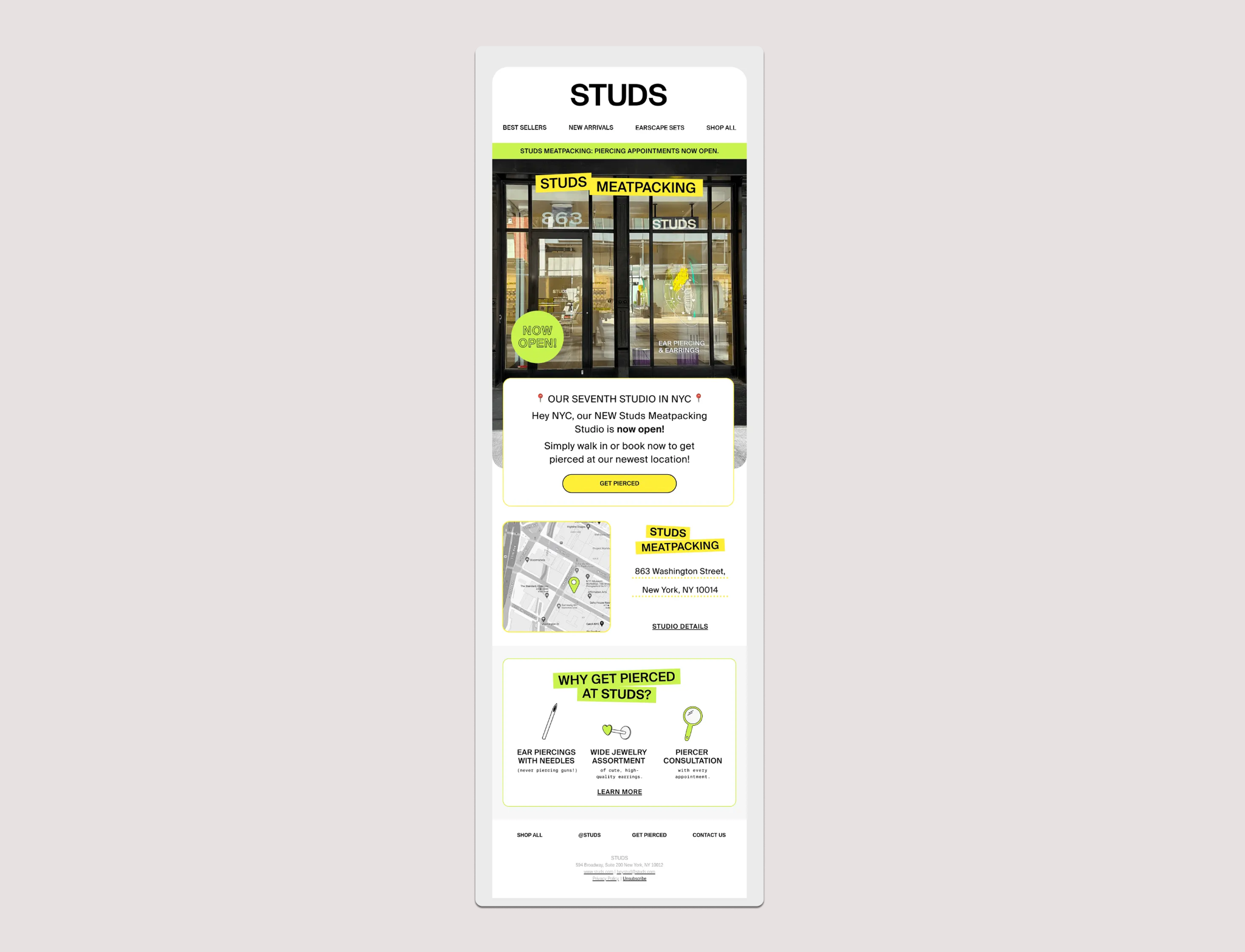
When Studs opened a new studio in New York’s Meatpacking District, its email opened with “Hey NYC,” showed the storefront, and added the full street address and a map, so local readers knew exactly where to go and could walk in or book an appointment. It’s a store opening rather than a Small Business Saturday email, and the same approach works for the day. If you have a physical store, give nearby subscribers the address and a reason to stop by. If your list spans several areas, segmenting by location lets you send those details only to the people close enough to use them.
Give people an offer that belongs to the day
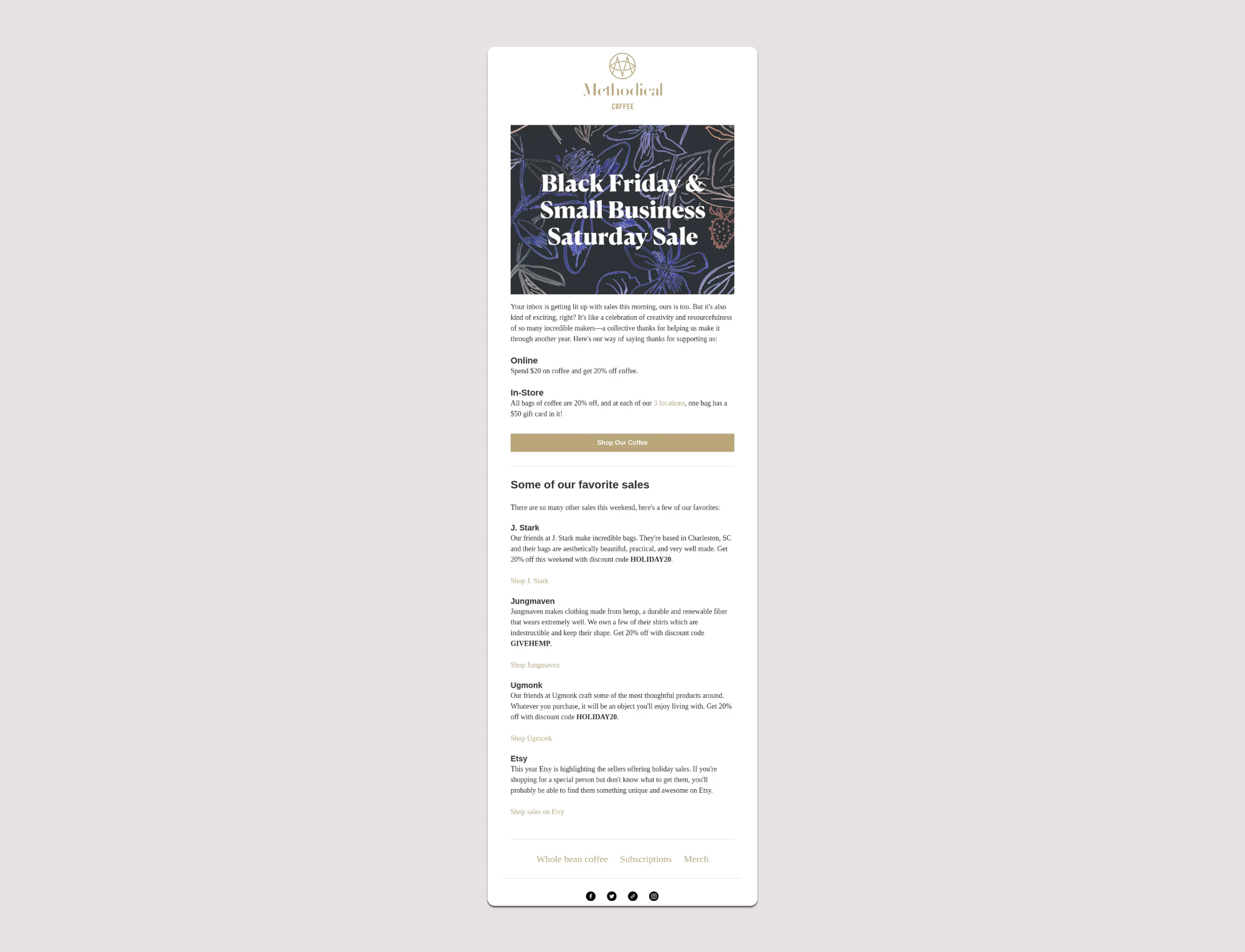
Methodical Coffee opens its Black Friday and Small Business Saturday email by thanking customers for helping the business through another year, then presents two offers, one online and one in store. Online, spending $20 on coffee gets 20% off. In its stores, every bag is 20% off, and at each of its three locations one bag hides a $50 gift card. That small surprise gives local customers a reason to come in person, and that’s the kind of visit Small Business Saturday is meant to encourage.
The same idea works on any budget. A product made just for the day gives people something to come for, and so do free extras like gift wrapping, engraving, or a short class in the shop. If you do offer a discount, a modest cut off the real price is easier to trust than a big number, and it gives people a reason to choose you that a bigger brand’s markdown can’t.
Support other small businesses, or team up with one
Small Business Saturday is built on the idea of a whole community benefiting together, and your email can reflect that. Methodical Coffee’s email also makes room for other brands. A section called “Some of our favorite sales” recommends small businesses like J. Stark, Jungmaven, and Ugmonk, each with a short description and its own discount code.
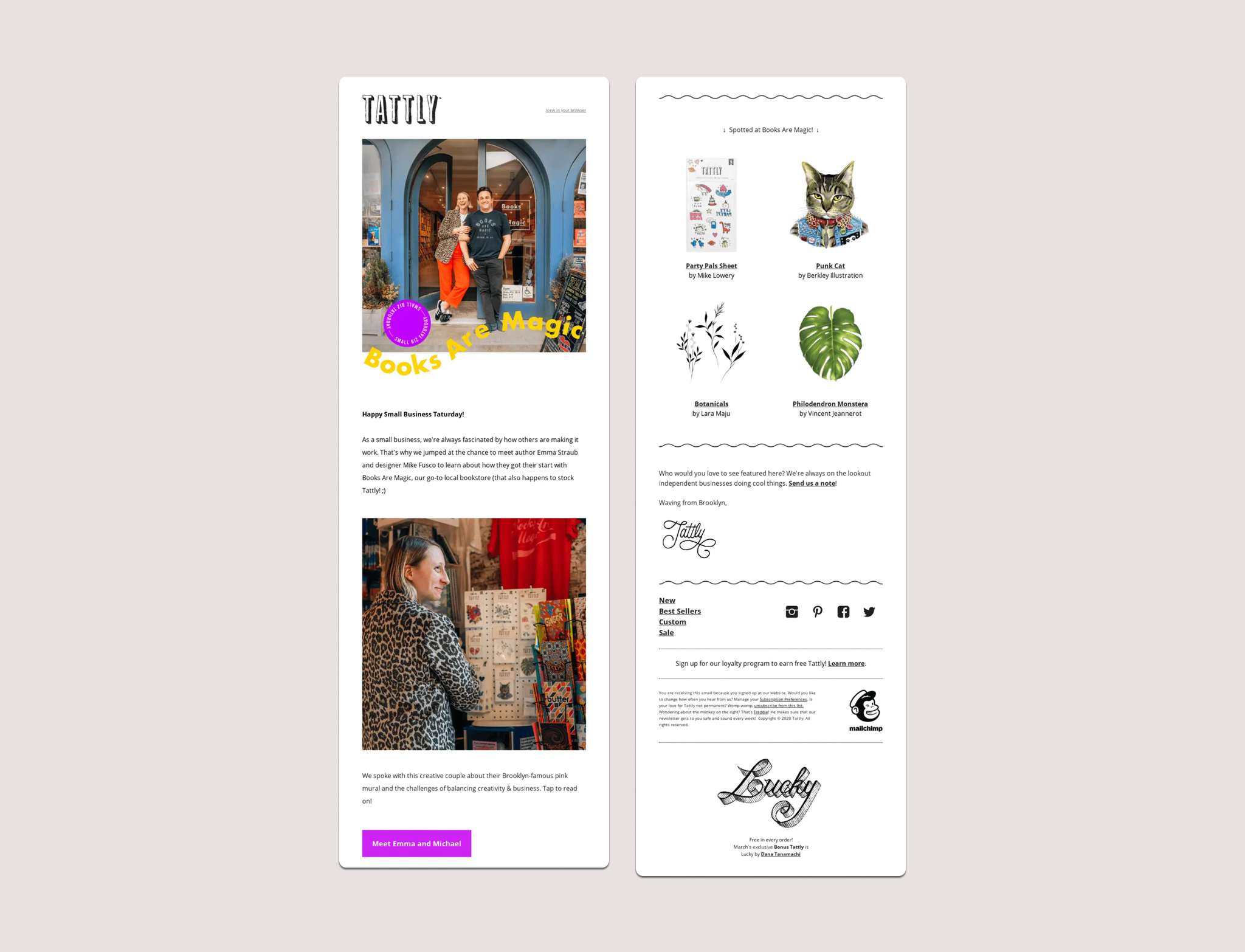
Tattly dedicated its whole Small Business Saturday email to Books Are Magic, the Brooklyn bookstore it calls its go-to local shop, which also stocks Tattly. The email introduces the owners, author Emma Straub and designer Mike Fusco, links to an interview about how they got started, and shows Tattly designs spotted on the store’s shelves. It closes by asking readers which independent businesses they’d like to see featured next.
You can also take the idea further with a joint promotion. Two neighboring businesses, like a coffee shop and a bakery, can share a deal for the day, send it to both lists on the same morning, and introduce each other to customers who might never have walked in otherwise.
Explain why the day matters, and who you are
On a day about supporting small businesses, an email about the business itself can carry as much weight as the offer.
Your place in the community
A few lines on what the day means for you, what a good weekend means for a team your size, or how long you’ve been part of the neighborhood give the email a purpose beyond the offer. Told in your own voice, that story is something a big retailer can’t borrow.
The people behind it
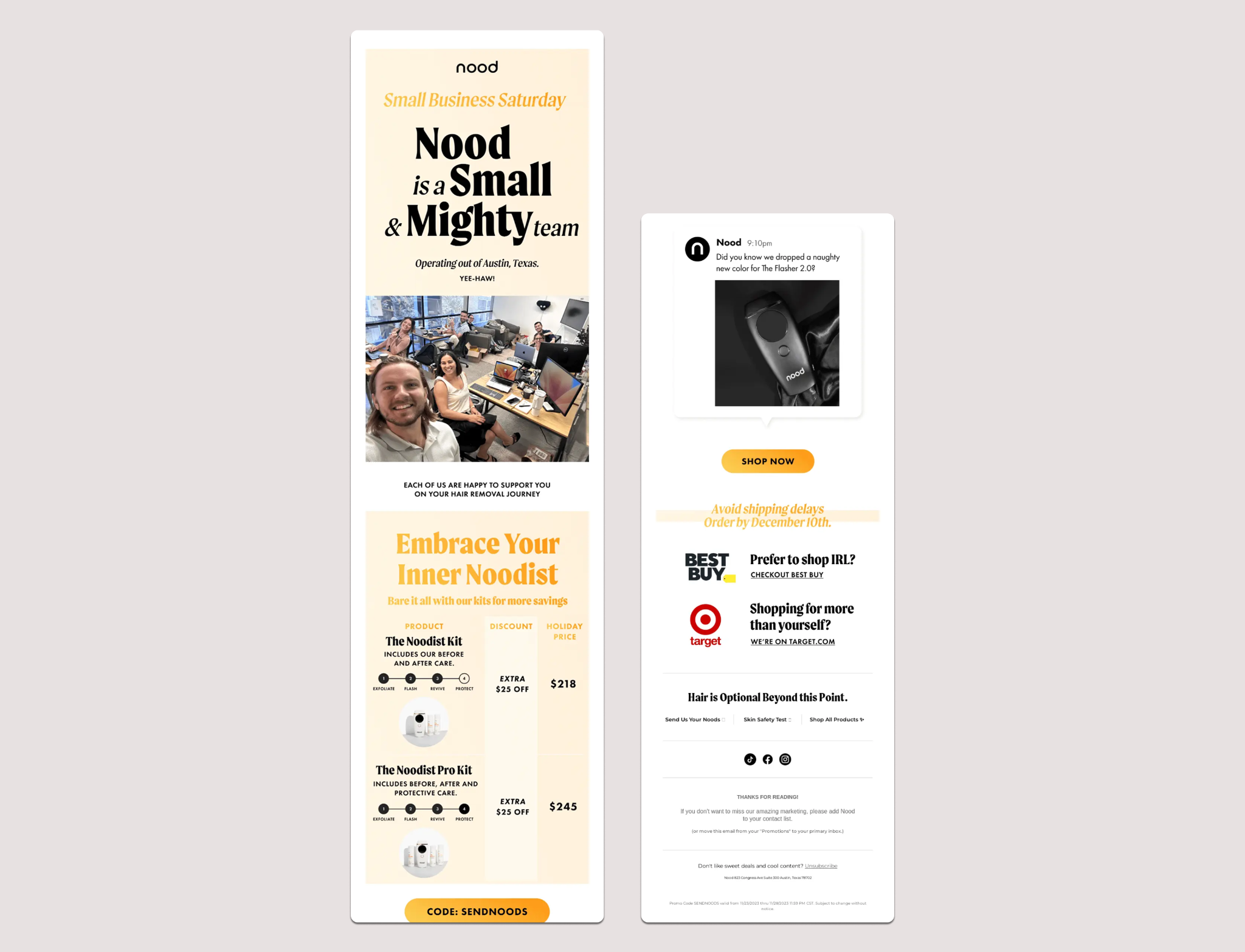
Nood puts its team first. The email opens with “Nood is a Small & Mighty team,” a group photo taken at the office, and a line saying everyone is happy to support customers on their hair removal journey. Only after that does it move on to the holiday kit prices and the discount code, so the offer comes from people readers have just met. A phone photo of your team, a short note on how a product is made, or an honest look at a busy week is enough to do the same.
Small details that make a difference
The subject line is the first thing readers see, so it’s worth giving it the same care as the email. Naming Small Business Saturday, or a variation like “Shop Small,” makes your email easy to recognize in a busy week. Tattly’s “❤️ Small Business Taturday” plays on its own name and still says exactly what the email is about. Nood’s “Just A Small Team in Austin 🤠” takes a different route, previewing the team-first email inside without naming the day. The sender name can help too. Sending as a person, like the founder or whoever runs the shop, tells readers before they open that the email comes from someone, not just a store.
Small teams have real limits, on stock, on staff, and on how fast orders can ship, and being upfront about them helps readers act in time. Nood includes “Avoid shipping delays, order by December 10th,” a plain date that tells readers what to do and when.
Some readers will open your email on their phone while they’re already out shopping, maybe a few streets from your door. Design mobile first, and make your address, opening hours, and map easy to tap. In RGE Studio, Preview mode lets you switch to the mobile view before anything goes out.
Keep Saturday’s shoppers coming back
Small Business Saturday brings in people who may never have visited before, and many of them won’t be on your list yet. In the American Express study, 80% of small business owners said the day can help build customer relationships that last beyond the holidays. That starts with an easy way to stay in touch. A QR code at the register, a sign-up card in every bag, or the option to get the receipt by email lets one-time shoppers join your list while they’re still in the shop. A few days later, a short thank-you with something to come back for, like a January workshop or early access to new arrivals, turns a single visit into the start of a relationship.
Getting started, if you’re building from scratch
A small team and a small budget are enough to get started. Pick a platform that handles your list, design, and basic analytics without a steep learning curve. Instead of sending the same email to everyone, split your list into a few groups that match how people shop with you, for example regulars, people who live nearby, and customers who only buy online. Once your emails go out, look at what gets clicked, what leads to a purchase or reply, and what causes unsubscribes, since privacy features in some email apps can make open rates less reliable. For the checks that apply to any sale weekend, like pausing regular discount codes in automated flows, see our Black Friday guide.
Making Small Business Saturday work for your business
Small Business Saturday puts independent businesses at the center of one of the busiest shopping weekends of the year, and your email is where you show subscribers what choosing you means. A bigger brand can match your discount, but it can’t send your customers’ words, your street address, a surprise tucked into a bag at your shop, your favorite neighbors’ sales, or a photo of your team. Pick the one or two that fit your business best, make one honest offer people can trust, tell it in your own voice, and send it to the people most likely to show up.
If you’d rather not start from a blank canvas, Really Good Emails has editable small business templates you can adapt for the day.
Articles to wet your whistle

Subscribe to our newsletter.
Dive into the world of unmatched copywriting mastery, handpicked articles, and insider tips & tricks that elevate your writing game. Subscribe now for your weekly dose of inspiration and expertise.