

Black Friday email marketing: what to send, and when
As Black Friday stretches across weeks, see what to send before, during, and after the sale, how brands offer more than a discount, and which subject lines fit each stage.

Black Friday starts earlier every year. Sale emails that used to arrive the week of Thanksgiving now often show up in early November, and the season feels less like a one-day rush and more like a month of planned shopping. Many shoppers compare prices across sites, apps, and AI tools before they buy, so a clear reason to choose you matters as much as the discount itself.
A longer season also gives you more room to plan. A useful way to do it is to split your Black Friday email marketing into three phases, pre-launch, sale launch, and post-launch, each with its own job. Below you’ll find Black Friday email examples for each phase, plus subject line ideas and a few checks to make before you send. For a look back at how Black Friday emails have been changing, watch our 2024 talk The Truth About Black Friday Emails.
Pre-launch: build anticipation before the sale goes live
The weeks before Black Friday are when you earn the attention you’ll need once the sale opens. A pre-launch email gives subscribers something to look forward to, without asking them to buy anything yet.
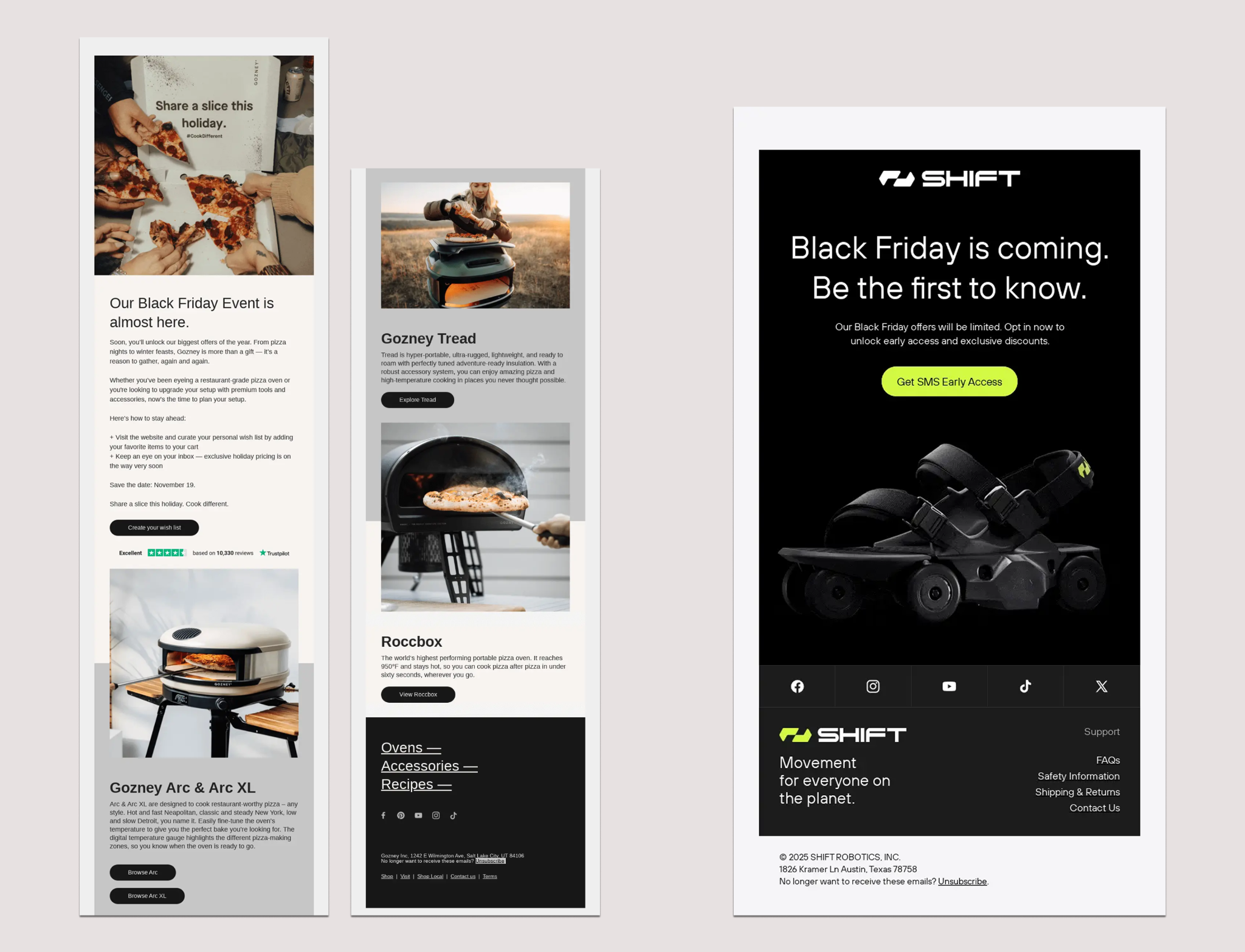
Gozney announces its Black Friday event before it starts, telling readers that the biggest offers of the year are on the way. The email suggests building a wish list by adding favorite items to the cart, asks readers to keep an eye on their inbox for holiday pricing, and gives them a date to save, with a “Create your wish list” button as the main call to action. The product section below introduces the ovens without showing any prices, so readers can have their picks ready when the sale opens.
Shift reaches the same goal with a much shorter email. It tells subscribers that Black Friday is coming and that the offers will be limited, then invites them to opt in to SMS for early access and exclusive discounts. Beyond the headline, two short lines of copy, and a product image, the email has a single button, which keeps all the attention on that one action.
If you collect sign-ups through a popup, the same idea works there. Swapping the usual “10% off” for “Get Black Friday early access” gives new subscribers a reason to join before the sale starts. Send your pre-launch emails several days before the sale opens, while there’s still time for subscribers to plan around your offer.
Sale launch: offer more than a discount
Once the sale is live, the email needs to make the offer easy to understand and easy to act on. A sitewide percentage is the easiest offer to compare with everyone else’s, so many brands now build their Black Friday around offers that feel more considered.
Bundles and kits
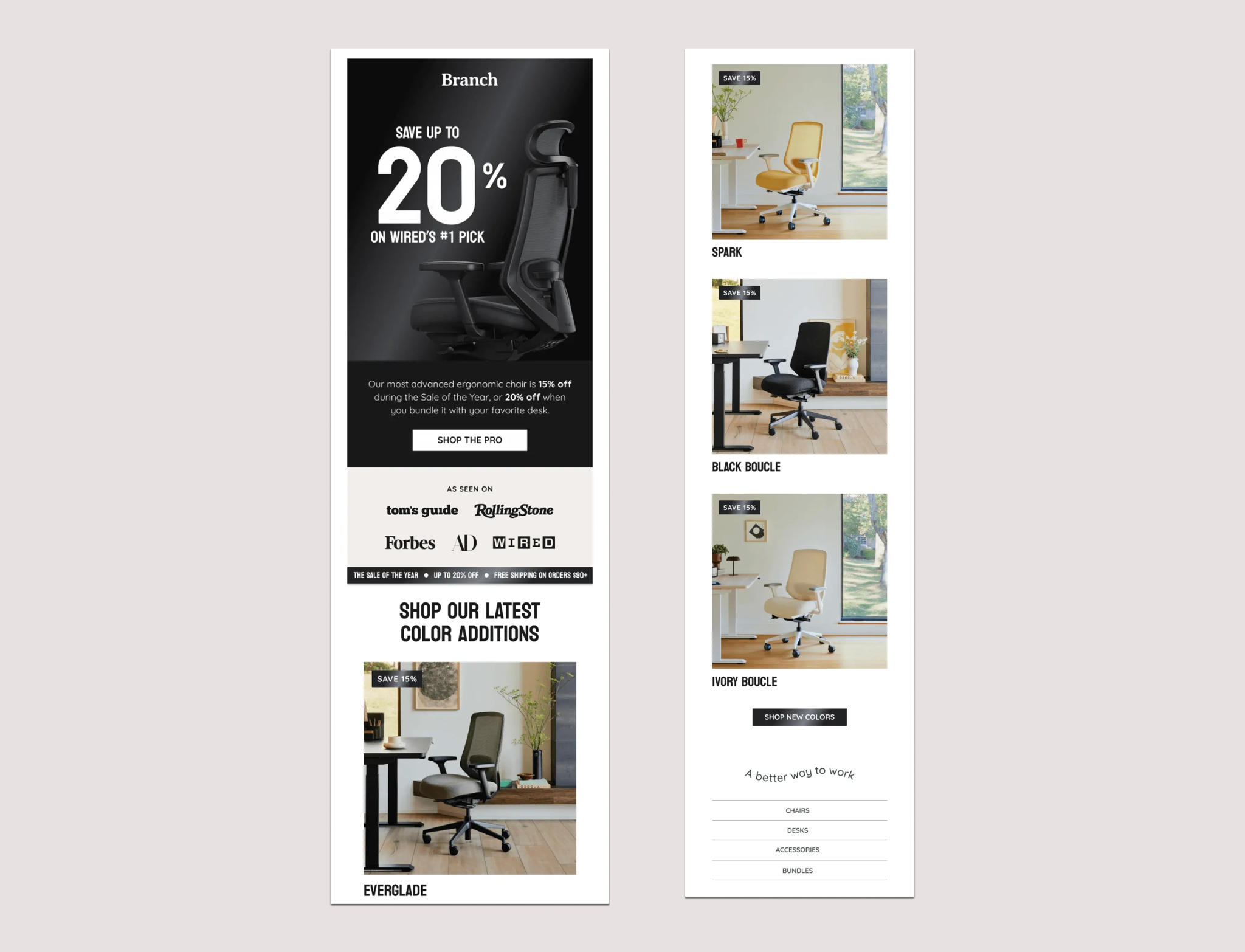
A bundle turns a single discount into a reason to buy more than one thing. Branch builds its hero around its most advanced ergonomic chair, presented as Wired’s #1 pick, at 15% off during the sale or 20% off when bundled with a desk. A row of press logos below supports the Wired claim, and the first screen stays focused on that one deal, so readers understand the offer before they scroll. Named kits, three-packs of bestsellers, or a build-your-own bundle with a set discount work the same way.
Early access for your best customers
Early access rewards the people already on your list. Giving subscribers or loyalty members the first window, the best deals, or products only they can buy creates a sense of exclusivity without cutting prices further for everyone. Shift’s SMS opt-in, above, is one way to build that list before the sale. Fable’s email, further down, takes a similar approach, opening with “Shop early Black Friday” and a “Sign in to shop now” button. Once the sale starts, a short email reminding members that their window is open, and when it closes, makes the perk feel real.
Limited-edition products
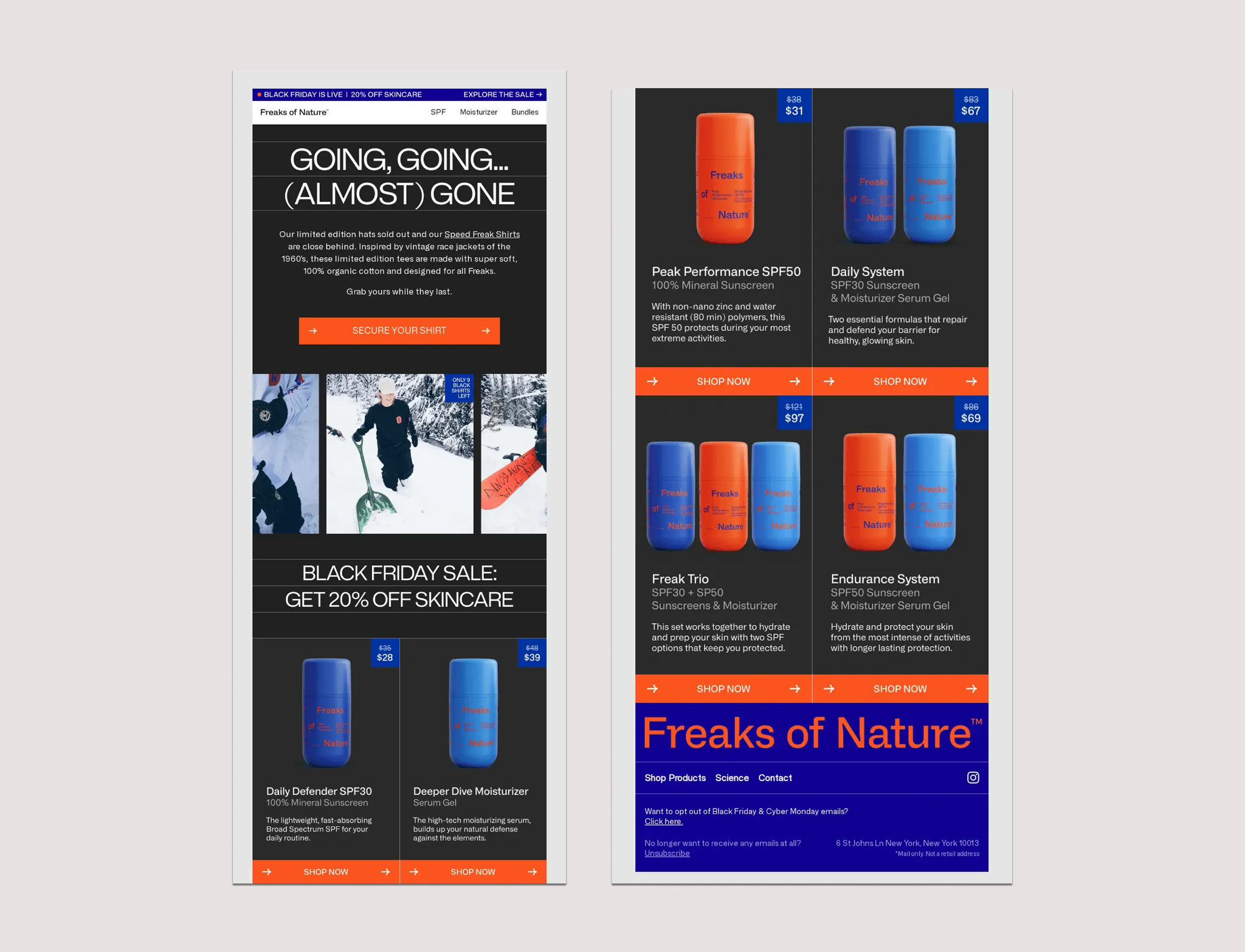
A product that exists only for the sale gives shoppers something they can’t find anywhere else. Freaks of Nature sends a “Low Stock Alert: Speed Freak Shirts” that opens with “Going, going... (almost) gone,” explaining that its limited-edition hats have sold out and its Speed Freak shirts, inspired by 1960s race jackets, are close behind. A badge on the product photo shows how many black shirts are left, so the scarcity is visible and specific. Its footer also lets subscribers opt out of Black Friday and Cyber Monday emails, a small courtesy for anyone who’s had enough of sale season.
Value beyond the price
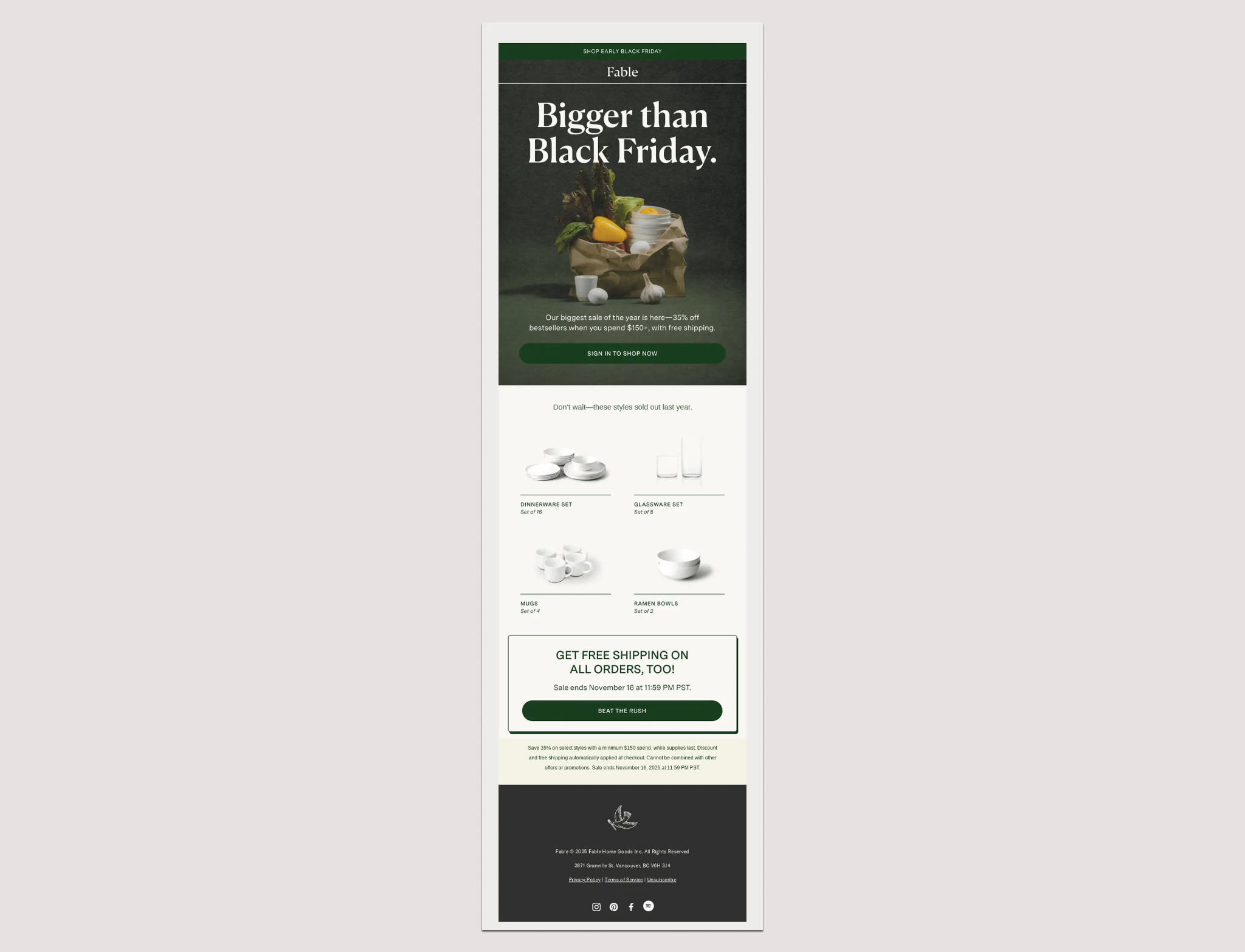
A gift, free shipping, or a better deal at a higher spend can protect your margins while still feeling generous. Fable offers 35% off bestsellers when you spend $150 or more, plus free shipping on every order, and adds a note that some of its styles sold out last year. The sale ends November 16, well before Black Friday, and its subject line, “Bigger than Black Friday: 35% Off Starts Now 💥,” makes that early start part of the message. Gifts with purchase above a set amount, credit toward a future order, or savings that grow with the order total follow the same logic.
A discount with a purpose
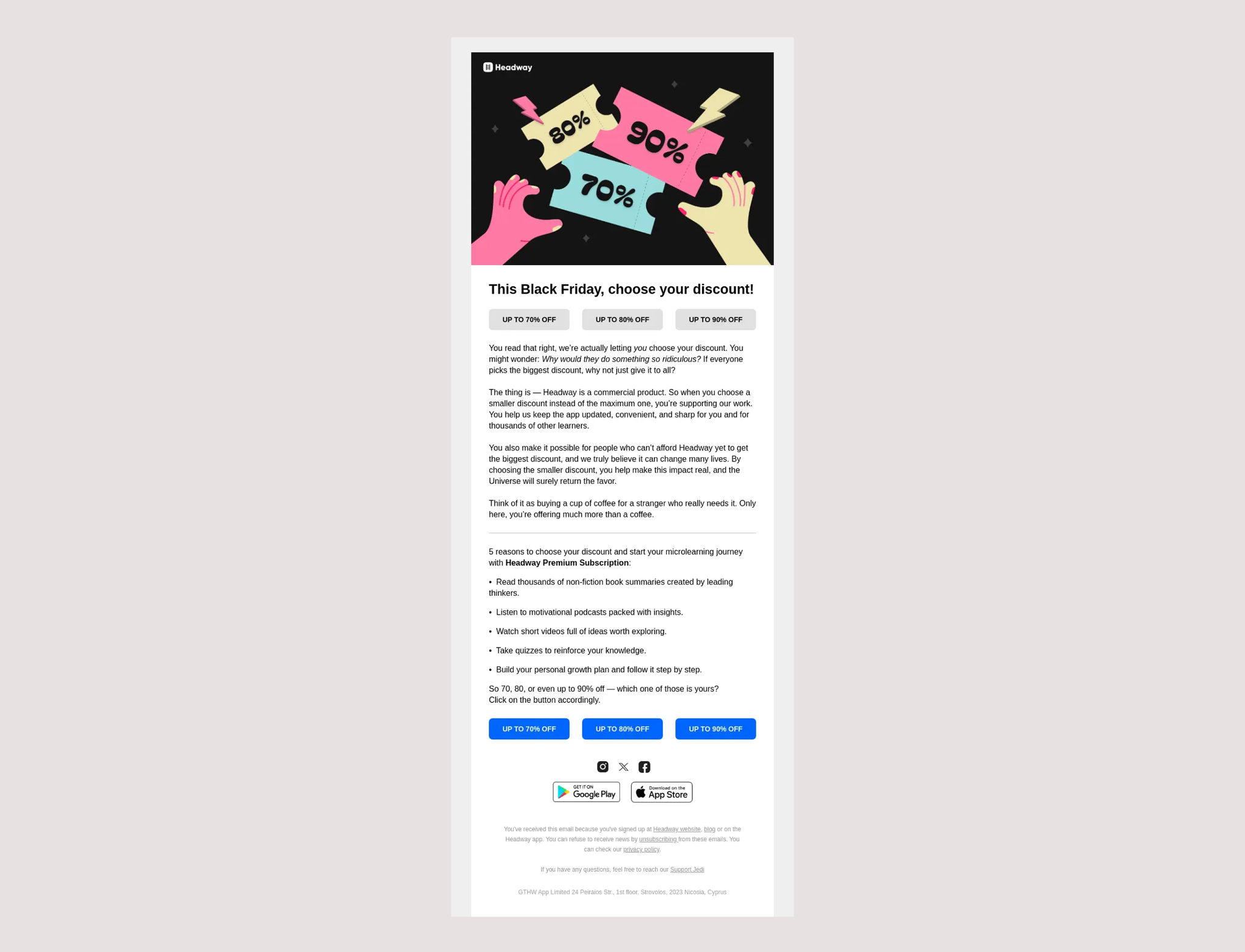
Headway turns the discount into a choice. Its Black Friday email lets subscribers pick between up to 70%, 80%, or 90% off, then explains why. Choosing a smaller discount supports the team behind the app and helps people who can’t afford Headway yet get the biggest one, which the email compares to buying a coffee for a stranger. Giving people a choice and a purpose behind it makes the email about more than the number.
Whatever offer you choose, plan a second send. If part of your list didn’t open the launch email, resending it a day or two later with a new subject line gives it another chance.
Post-launch: thank your customers and give latecomers one more chance
The days after Black Friday are a good moment to reach two groups, the people who bought and the people who meant to. Both work best when the urgency is real. Countdown timers that reset every few days make every deadline easier to ignore, while a firm end date or a genuine stock limit gives people a true reason to act.
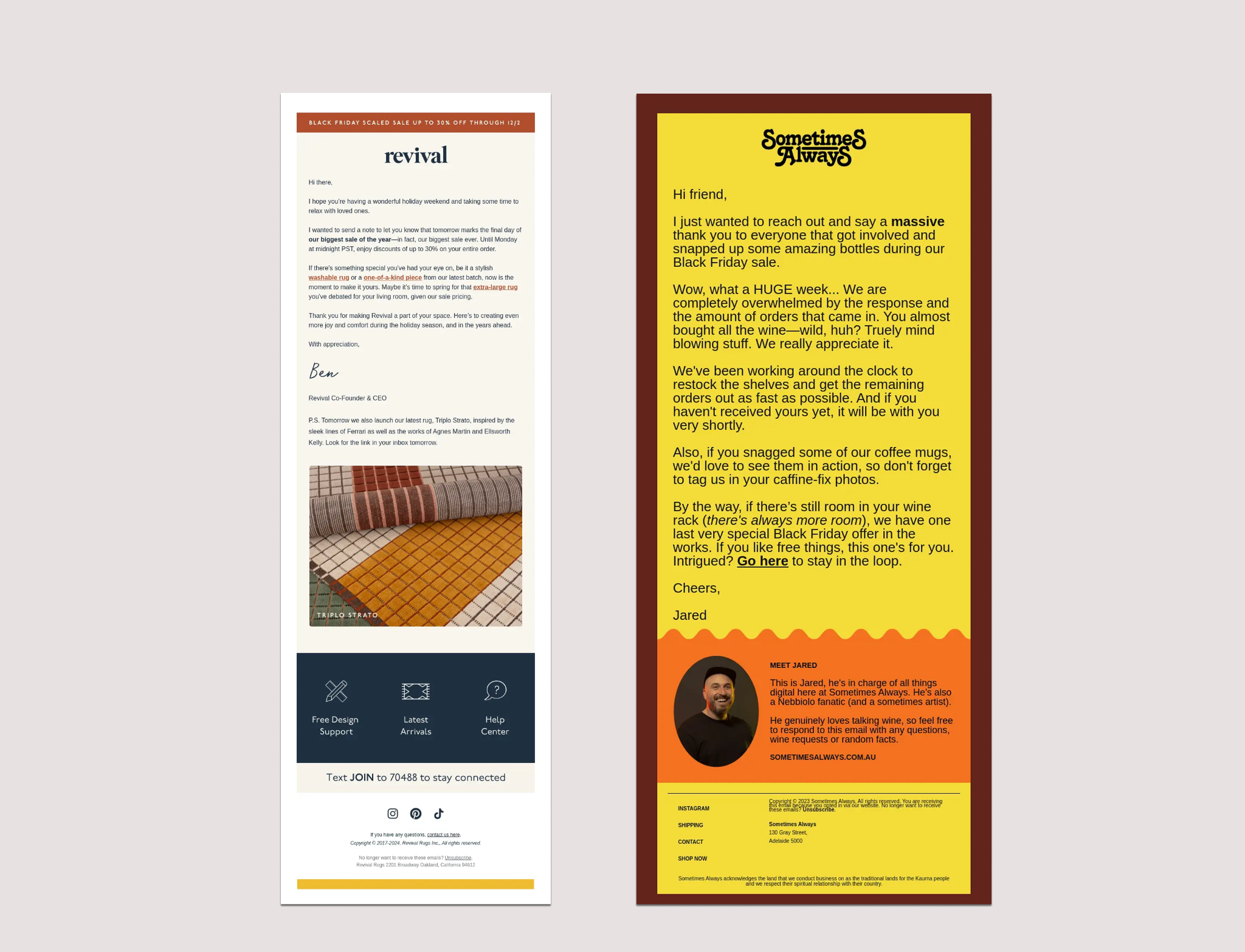
Revival writes to the people who haven’t bought yet with a short note from its co-founder and CEO, sent during the holiday weekend. It explains that the next day is the final day of the brand’s biggest sale ever, with up to 30% off until Monday at midnight PST, and links to specific products readers might have had their eye on. The note thanks readers for making Revival part of their space and uses a P.S. to tease a new rug launching the next day. With the deadline written into the copy, readers know exactly how long they have.
Some of those latecomers will have left something in their cart while comparing deals, so it’s worth checking that your abandoned cart emails are ready before the campaign begins.
Sometimes Always writes to the people who already bought. Its post-Black Friday email, signed by Jared from the team, thanks subscribers for a week so busy they nearly bought all the wine and shares an update on restocking and shipping. Only at the end does it mention one last Black Friday offer, with a hint that it involves free things and a link to stay in the loop. A “Meet Jared” section invites readers to reply with wine questions or requests, so they have a real person to write back to. Because the thanks comes first, the extra offer feels like a bonus.
Once someone has bought, consider removing them from the rest of your sale emails. A thank you is a better follow-up than another discount on something they already own, and our customer appreciation emails collection has plenty of ideas.
Or step back from Black Friday altogether
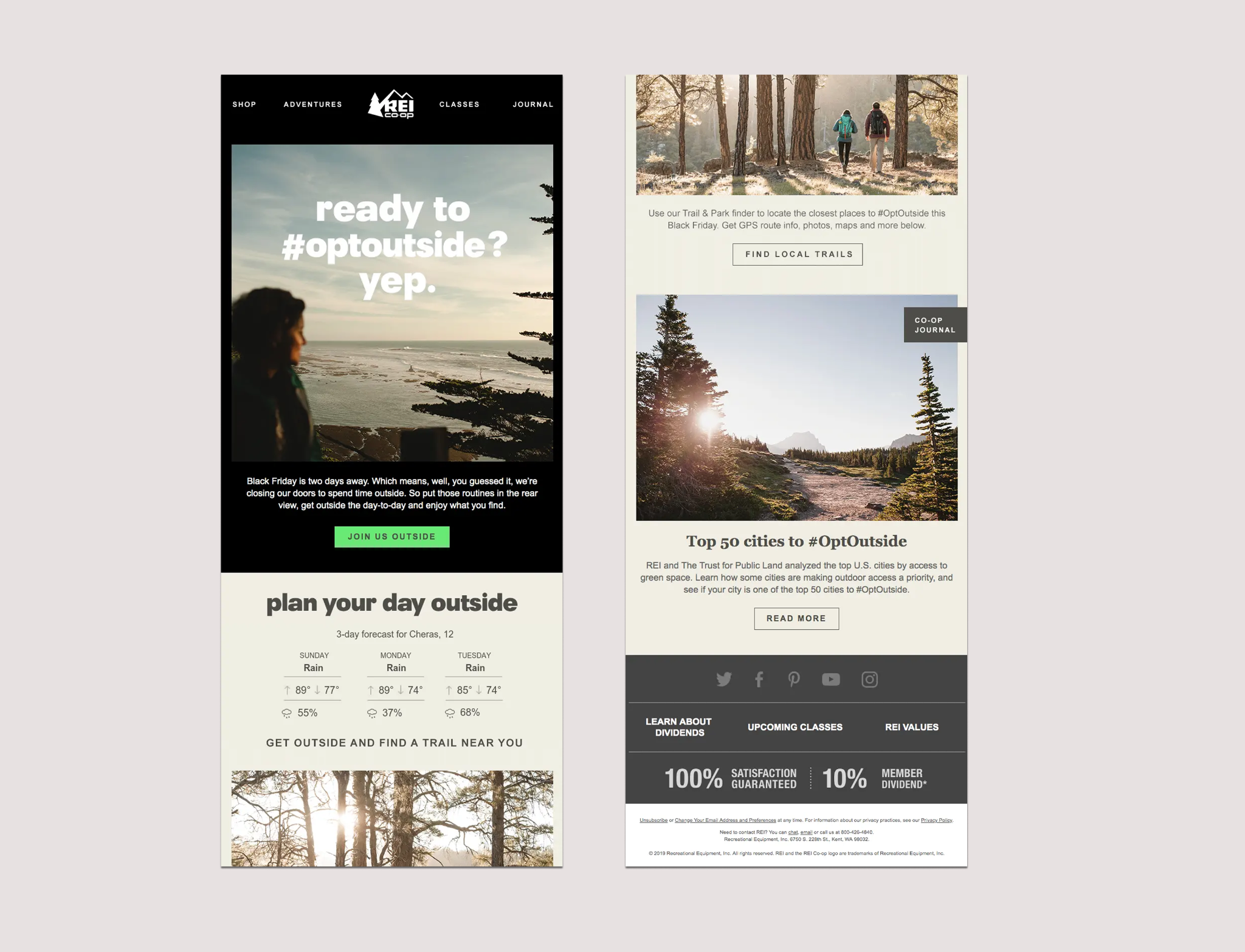
Some brands stand out by sitting the day out. Since 2015, REI has closed its stores on Black Friday and invited people to spend the day outside under the #OptOutside banner, and in 2022 it made the closure permanent, with a paid day off for its employees. Its email, with the subject line “Switch Things Up on Black Friday and #OptOutside,” arrives two days before Black Friday, explains that REI is closing its doors so everyone can spend time outside, and helps subscribers plan the day with a three-day weather forecast and a link to find local trails. Opting out won’t suit every brand, but when it matches what a brand stands for, the email itself becomes the statement.
Black Friday subject lines that get opened
The subject line decides whether any of the work above gets seen, and during Black Friday season it competes with more emails than usual. Different approaches suit different phases.
- Teasers hint at a deal without revealing it. Gozney’s “Black Friday is almost here...” fits the pre-launch phase, when the goal is curiosity.
- Exclusive access taps into the same instinct that makes people want to join a members-only list. Shift’s “SMS subscribers get Black Friday deals first” tells readers exactly what they’d get by signing up.
- Clear numbers work at launch because the deal is what many people are looking for. Branch’s “Wired’s favorite office chair is up to 20% off” pairs the number with a reason to trust the product.
- Limited-time framing, like “last call” or “ends tonight,” fits the post-launch phase, as long as the deadline is real. Our last chance emails collection has plenty of examples.
A subject line can also leave the sale out entirely. Revival’s “A letter from our co-founder” and Sometimes Always’ “A Thank You Note From Jared 🙏” both sound like personal messages and leave the offer for the email itself.
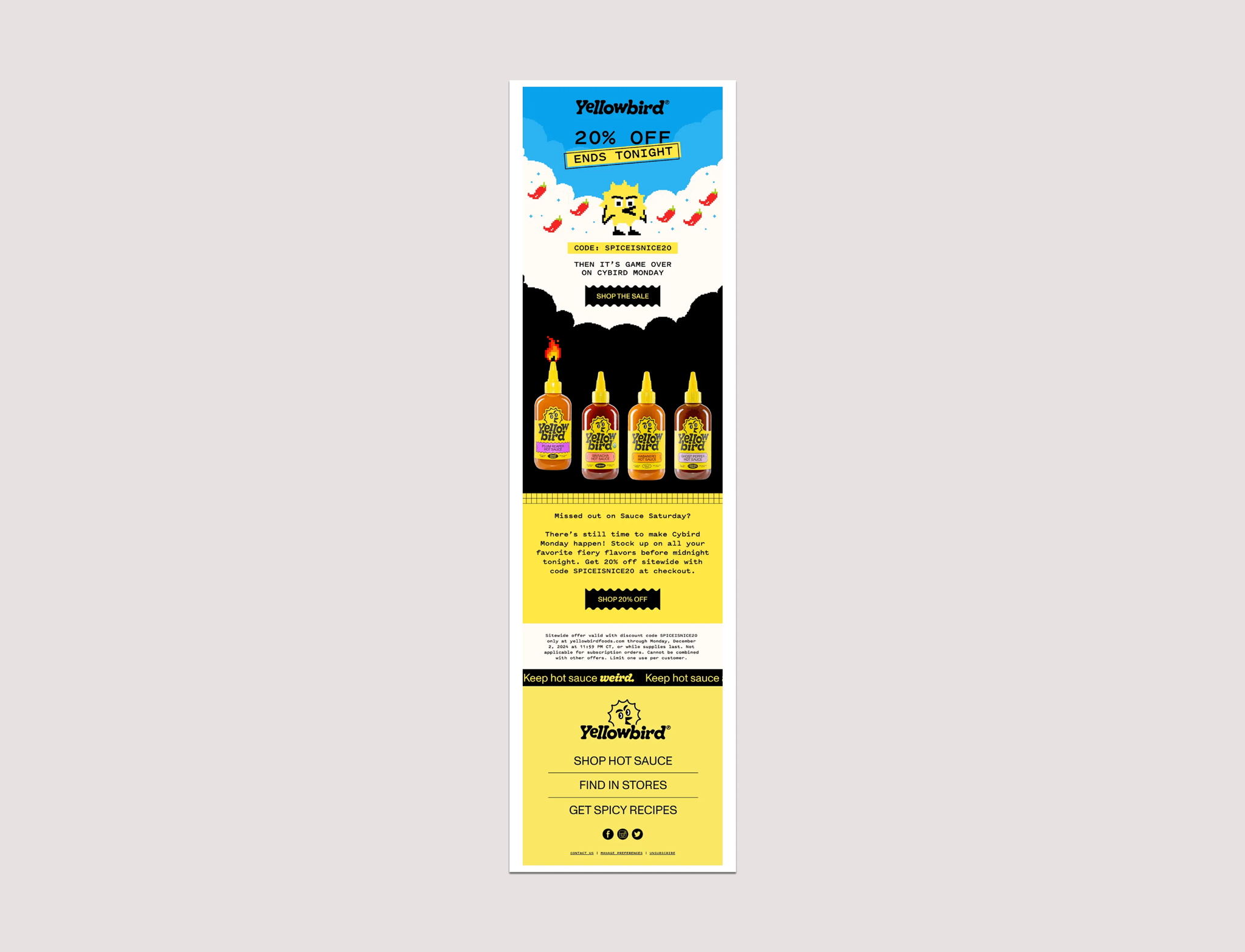
Whatever approach you pick, make sure the sender name, subject line, preview text, and email content tell the same story. Yellowbird keeps its Cyber Monday subject line playful, “Cybird Monday 🐥 20% OFF,” then puts “20% off ends tonight” at the top of the email and repeats the midnight cutoff in the copy below.
A few checks before you hit send
- Pull your regular discount codes out of automated flows during the sale, so a welcome or abandoned cart email doesn’t compete with your Black Friday offer.
- Push purchase review requests back a little, since holiday shipping takes longer and many orders are gifts.
- Write a short “we made a mistake” email in advance, ready in case a code or link breaks.
- Keep an eye on deliverability. Sending more email than usual raises the risk of landing in spam, so make sure you meet Gmail and Yahoo’s requirements for bulk senders, like authentication and one-click unsubscribe.
Putting your Black Friday campaign together
Black Friday now stretches across weeks, and that gives each email in your sequence room to do one clear job. Before the sale, earn attention with a date to remember or early access worth signing up for. Once it’s live, give people a reason to choose you that goes beyond the lowest number, whether that’s a bundle, a limited product, or a perk only your list gets.
In the days after, a real deadline brings latecomers back, and a thank you shows the people who already bought that you noticed. The brands that stand out treat Black Friday as an event for their best customers rather than a race to the deepest markdown, and some decide the best move is to sit it out. Map your own emails to those jobs, pick the subject line approach that fits each phase, and design every email mobile first. In RGE Studio, Preview mode lets you switch to the mobile view before anything goes out.
If you’d rather start from a template than build a sequence from scratch, Really Good Emails has editable Black Friday templates and teaser templates you can adapt to each phase. For ideas from the days that follow, browse the Cyber Monday collection.
Articles to wet your whistle



Subscribe to our newsletter.
Dive into the world of unmatched copywriting mastery, handpicked articles, and insider tips & tricks that elevate your writing game. Subscribe now for your weekly dose of inspiration and expertise.