

What separates a real Breast Cancer Awareness Month campaign from a pink banner
You can usually tell within the first line whether a Breast Cancer Awareness Month email is a genuine commitment or just a marketing calendar tick.

.png)
You can usually tell within the first line whether a Breast Cancer Awareness Month email is a genuine commitment or just a marketing calendar tick. The difference rarely comes down to budget or the size of the creative team. It comes down to whether anyone slowed down enough to get the tone right before hitting send.
One in eight women will develop breast cancer in her lifetime, so nearly every brand runs a campaign every October. It's some of the hardest cause marketing to get right. A discount code and a pink banner rarely feel like enough, and after almost a decade of these emails, the fundamentals still trip up plenty of good ideas.

1. Be creative about the connection
You don't need to be a medical or wellness brand to say something worth reading during Breast Cancer Awareness Month. A fitness company can talk about how exercise lowers risk. A financial brand can talk about the real cost of treatment. Brands outside health and wellness often assume the connection has to be obvious to count, so they skip the month entirely. PetParty, a pet products brand, ran pink ribbon-themed backgrounds across its products despite having no obvious tie to the cause. The connection worked because it felt genuine.
2. Get the copywriting right
Copywriting carries more weight here than almost anywhere else in email marketing. If you're not sure you're getting the tone right, talk to someone who has been affected by the disease before you hit send. Most brands skip that step under deadline pressure, and it usually isn't because it's hard. It just never makes it onto the checklist.
A subject line can say exactly what the email means, with a reminder that every little bit helps. A leadership letter with no modules and no CTA button can carry a whole email on its own, just the message. A stripped-down design paired with a nonprofit partnership and a founder's signature can do the same.
A short, direct email with no attempt to tug at heartstrings works just as well, especially when the offer itself is straightforward. Match the tone to what you actually have to say.
3. Let a real story do the talking
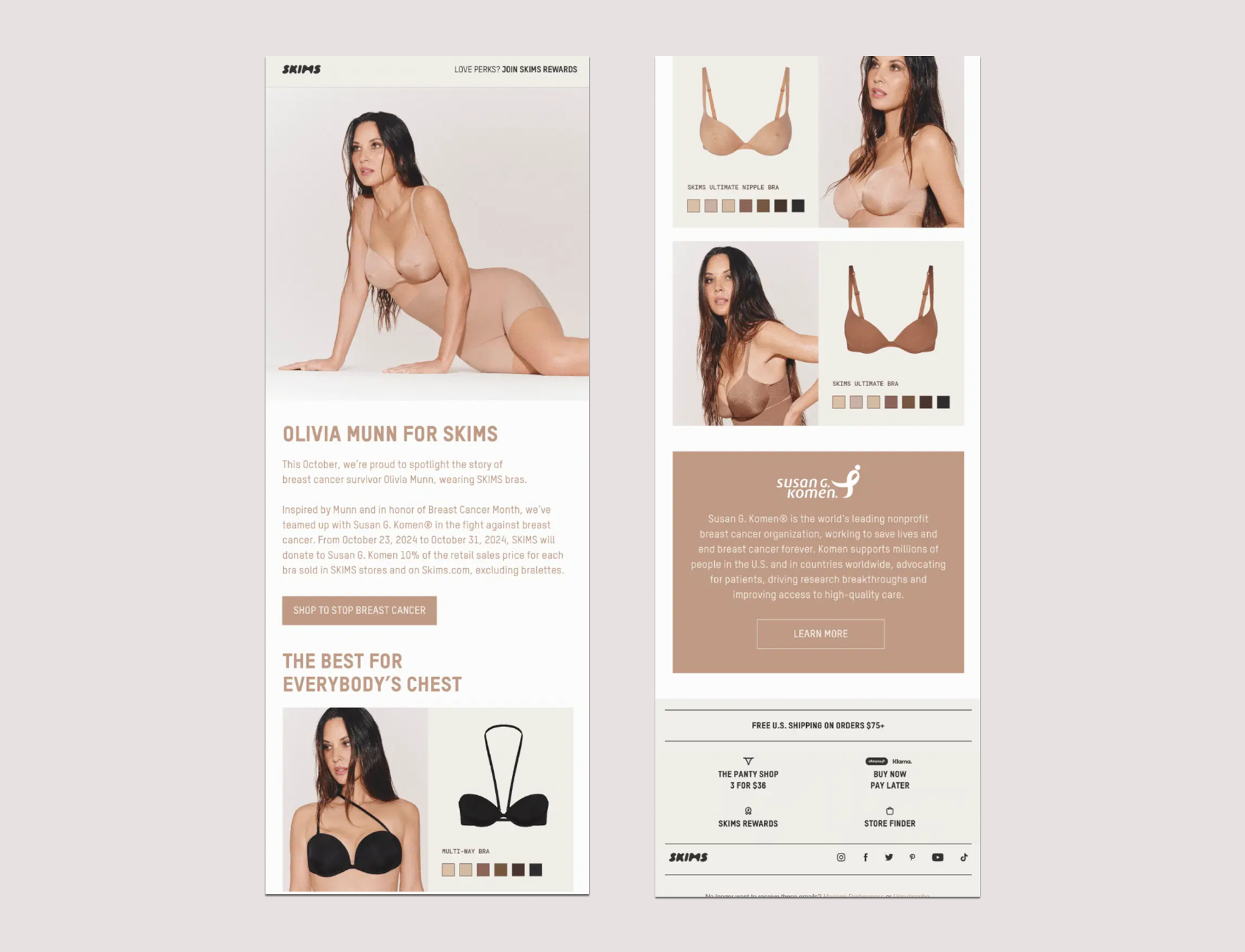
If you're struggling with what to say, hand the mic to someone else. SKIMS built its October campaign around Olivia Munn, a breast cancer survivor, and let her story anchor the whole email instead of leading with product. Her story did the work a testimonial never could.
4. Make sure it renders the way you designed it
A well-written message still has to survive Outlook, dark mode, and a blocked-image inbox, and that's where a lot of otherwise good campaigns fall apart. Live text holds up better than text baked into images. Buttons need enough padding to tap comfortably, and body copy reads faster on mobile left-aligned than centered. Small details, but they matter more than they get credit for. The cautionary version of this is a strong idea that never gets tested with images blocked, so nobody catches that the buttons and the background depended on an image loading in the first place.

5. Donate a percentage of your sales
This is one of the most effective moves available, partly because it barely feels like a tactic. People buy something they might have bought anyway, and part of that purchase goes to where it matters.
Methodical put all proceeds from its entire coffee blend toward Clemson radio station The ROAR's "Tigers for Tatas" fundraiser, in partnership with Dabo Swinney's All In Team Foundation. SKIMS donated 10% of the retail price on every bra sold from October 23 through 31 to Susan G. Komen. You don't need an existing bestseller to pull this off. A limited, cause-tied offer gives people a reason to buy that wouldn't otherwise exist.
6. Educate along the way
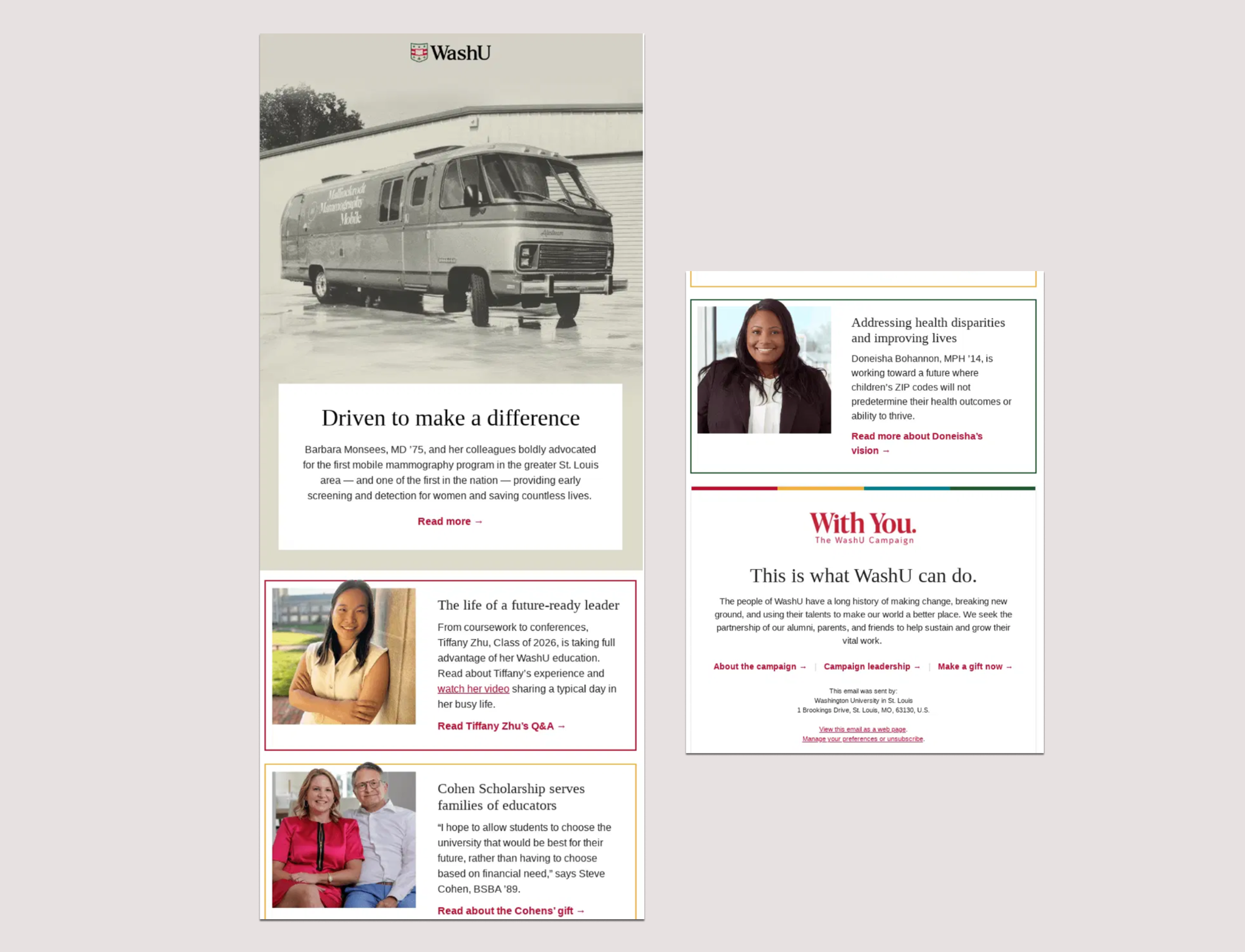
Plenty of people opening your email won't know much about the disease itself. A statistic woven into your copy or a link to something worth reading gives them a reason to keep going and makes whatever ask comes next feel earned. WashU took a different route: it introduced Barbara Monsees, MD '75, and the mobile mammography program she helped launch, giving readers just enough context to understand why the program matters before asking them to support it.
7. Start with a template built for this
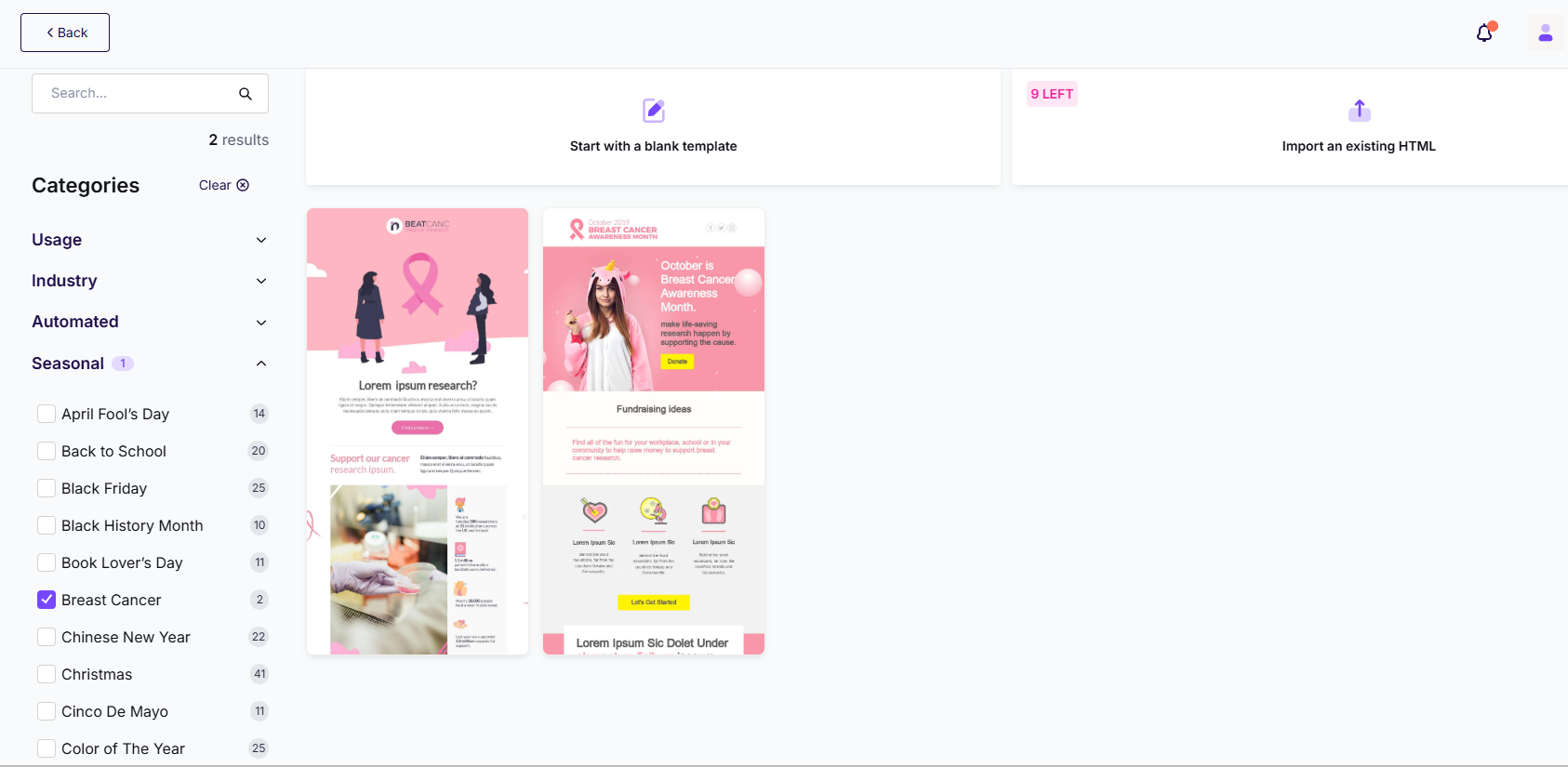
You don't have to start from a blank page. RGE Studio has Breast Cancer Awareness email templates that give you a structure built for this kind of campaign, so you spend less time staring at a blank canvas and more time getting the message right. Customize them with your own campaign details, or browse real Breast Cancer Awareness Month emails for more inspiration before you start.
Say something true, then build it to last
Most of what goes wrong in a Breast Cancer Awareness Month email isn't complicated. It's someone skipping the read-through with someone who's actually been affected, or shipping an animation that nobody tested with images blocked. Get the tone right, and build something that survives Outlook, dark mode, and a blocked-image inbox long enough for someone to actually read it.
Articles to wet your whistle


Subscribe to our newsletter.
Dive into the world of unmatched copywriting mastery, handpicked articles, and insider tips & tricks that elevate your writing game. Subscribe now for your weekly dose of inspiration and expertise.