

Why Every Team Needs an Email Design System
Learn why every team needs an email design system. Improve collaboration and consistency in email marketing!

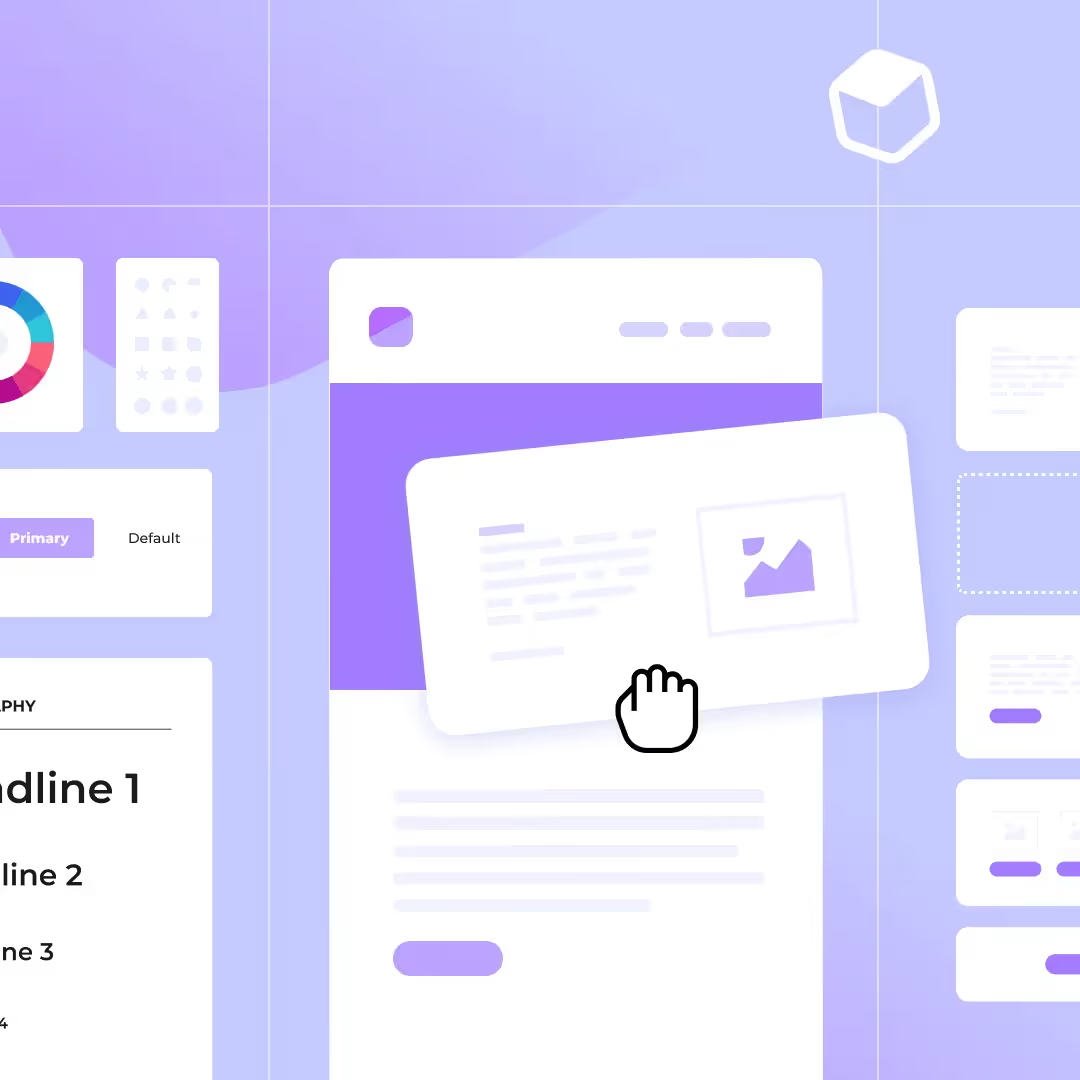
Your brand is more than its first impression. You may remember your first Coke but what keeps you coming back is knowing you'll get that same flavor every single time. In the same way, your customers need to know what to expect from your brand messaging and visual identity. That's where email design systems come in.
Brand loyalty is built through repeated communication with your audience. If that communication looks or sounds different from message to message, your audience becomes wary. One design systems engineering manager shared a great example: before implementing a design system, the emails a company sent looked so different from each other that customers started marking it as spam. Instead of trusting the email, they would assume a hacker was posing as the brand because the branding and design were off.
Reasons designing emails feels slow
Most marketing teams, large and small, have bad habits that run rampant, including:
- Building designs from scratch every time
- Constantly shuffling responsibilities around the team
- Assigning tasks to the wrong team members
- Relying too heavily on marketing or creative teams to make assets
Design systems put an end to this by creating components in advance so that the creative team can pass ready-made templates and components to marketing, sales, and beyond. It takes time to implement a proper design system, but once you have it, it saves time and increases revenue by keeping everyone on the same page, strengthening your brand, and freeing up time for your creative team to work on other projects.
What is a design system?
A design system is a set of guidelines and principles that outline the components and patterns that make up your brand. Then, designers can create small design components — "legos" — that can be combined to make a complete design. In essence, design systems enable modular design. Instead of making everything from scratch, pre-made pieces let you build an email or landing page as if you were stacking legos. By including things like an icon library, a predefined color palette, and a list of approved fonts, you can create consistency quickly.
The email design system revolution
Using design systems in emails used to be difficult, if not impossible. Technology has made it easier than ever to save and re-use content. When developing your email design system there are two main components:
- Template — outlines the flow of the email, sketching what should go where while still allowing for changes.
- Module — the boxes that fill in the outline, which you can fill with text, videos, pictures, or anything else you want to share.
Implementing an email design system is the easiest way to produce content and quicken deliverability without reducing quality. Instead, you choose your template, add your brand constants, and drag and drop what you want from there.
Top tips for implementing your email design system
Center your brand instead of trends
When you build from scratch, it's tempting to follow every new trend. Breaking your brand into reusable pieces forces you to really think about what makes your business unique. These are components you want to use over and over again, so what do you really want your brand to represent?
Choose the right tools
The tool you use determines the ease of your implementation. Having a program that stores your brand kit preferences or can easily export your emails and landing pages to the marketing platform of your choice is essential. Your tool should also help you save time and stay error-free at every step of the process — synced content blocks make it easy to keep design systems updated, since changing the contents of a row in one template automatically syncs the change across every area where that row is used.
Encourage collaboration
Involve relevant team members and stakeholders early on. It's easy to ask for feedback on specific components, allowing the different strengths of each of your team members to shine.
Build your email design system
Using templates and modules for both emails and landing pages, you can create a design system that integrates quickly and easily with teams of all sizes, reducing the stress and frustration of your email campaigns.
Articles to wet your whistle



.png)
Subscribe to our newsletter.
Dive into the world of unmatched copywriting mastery, handpicked articles, and insider tips & tricks that elevate your writing game. Subscribe now for your weekly dose of inspiration and expertise.