

Your Go-To Guide For Ecommerce Email Marketing Campaigns
Discover your go-to guide for ecommerce email marketing campaigns. Boost your online sales and engagement!

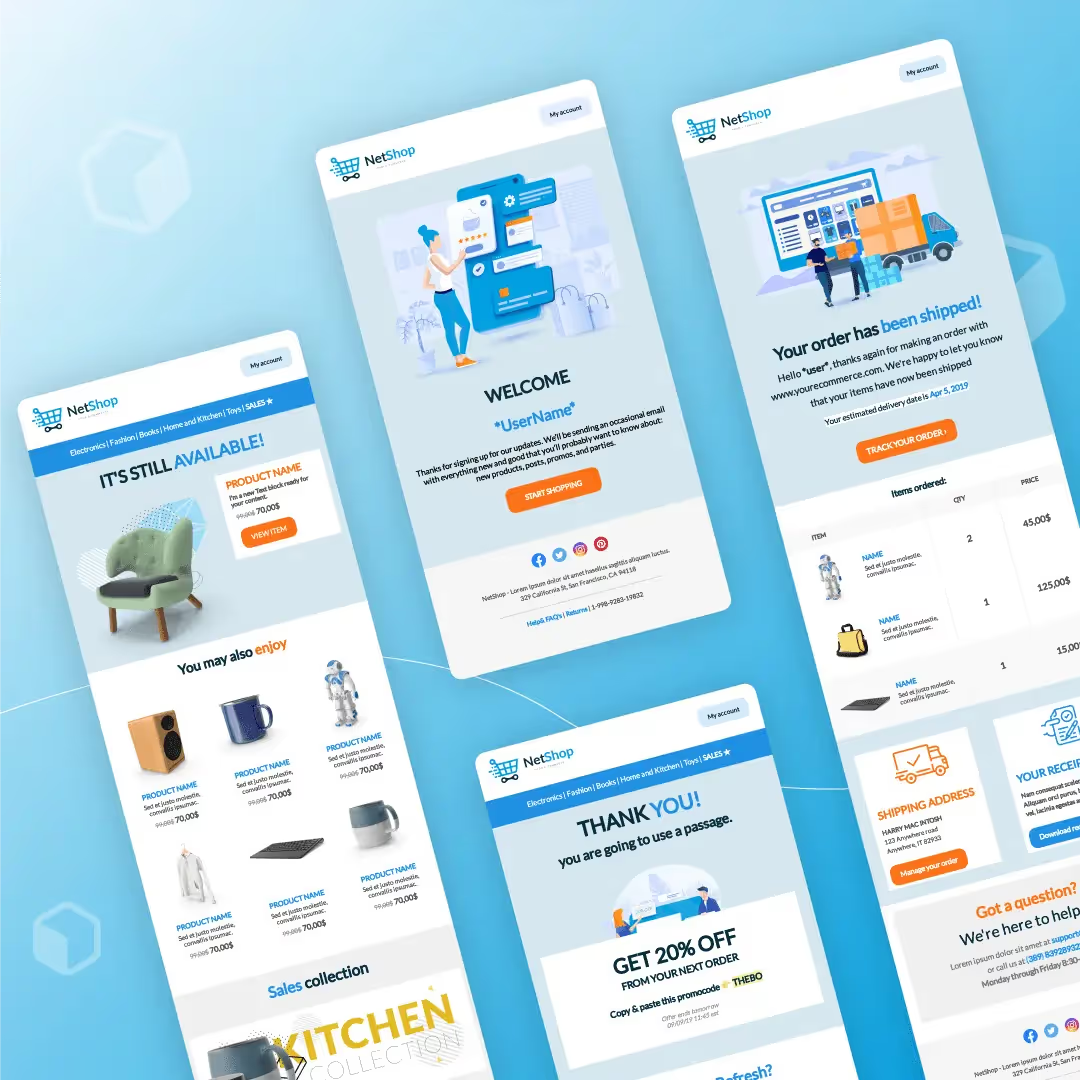
Establishing your ecommerce business in the digital world is overwhelming due to the sheer number of moving parts and channels. The good news is you don't have to be everywhere at once. Strategically focusing on one communication channel allows you to create genuine connections and stand out from the crowd. Email marketing is the best marketing channel to convert ecommerce website visitors into customers because it's relatively inexpensive and used by every generation. Recent data shows nearly 18% of businesses with email marketing campaigns achieved ROIs over $70 per every $1 invested.
What is ecommerce email marketing?
Ecommerce email marketing is a marketing strategy that uses emails to guide potential customers through the buying process, all about building relationships and inspiring customer loyalty to increase repeat purchases. It includes both promotional emails (new products, offers) and transactional emails (abandoned cart, receipt of payment, shipping confirmation). Key practices: personalize, offer exclusive discounts to returning customers, A/B test, optimize for mobile, create a referral program, ask for reviews and feedback, notify customers when items are back in stock, follow up on leads, track which emails are most responsive, and include an unsubscribe option.
Best tips to leverage your ecommerce email marketing
1. Establish your brand identity
Your ecommerce brand identity is your business personality: how customers perceive your business. Think about your name and taglines, images, email and web domains, colors, and fonts, and keep them consistent across all content to build credibility and trust.
2. Use each email as an opportunity to engage
Every email you send is a chance to engage with your customer base, not just campaigns but also newsletters, appointment confirmations, and receipts. Develop a structured marketing calendar and a strong welcome series, automate them, and build your list with opt-in opportunities and free offers.
3. Adopt a mobile-first approach
Think mobile first: bigger buttons, bigger text, simple message structure, and responsive layout. Use a design tool that ensures your campaigns render correctly for a mobile audience before any other user.
4. Design uncluttered, focused messages
Attention spans are short, so keep email messages focused, clear-cut, and uncluttered with minimal topics. Best practice is to have only one call to action; if you need multiple, visually separate those sections with white space, background colors, and full-width images.
5. Choose the right design tools
Decide on the design tools that work best for your ecommerce business, using an extensive collection of ecommerce templates to build from or as inspiration for your sequence.
6. Design with the email client in mind
Find out which email clients your customers use most, whether Gmail, Outlook, or Apple, and design emails following best practices for that specific client.
7. Include email elements that intrigue your target audience
Insert new elements like GIF animations and live content like countdown timers and dynamic maps. Make sure the first frame of your email excites your target audience, and track results as you experiment.
8. Make it modular
A modular design system means each touchpoint is replaceable without requiring other parts to be significantly modified, applying both to your email campaigns and the functionalities driving your ecommerce business.
9. Elevate your strategy with landing pages
Landing pages are great opportunities to drive traffic and conversions, where people opt into your mailing list. Include opt-in forms, keep landing page links in your social media bios, and optimize landing pages, shopping carts, and checkout pages for mobile.
10. Scale your ecommerce business
Know when to outsource, whether for payment portals, proposals, or invoices, and use a professional ESP that matches your customers' preferred email clients.
11. Maintain customer engagement
Continually nurture your client base through fluid communication. Track your email engagement metrics to better understand what design and content changes connect with your customers and boost conversion rates.
12. Integrate tools and automate emails
Make sure your website, shopping cart, shipping services, payments, accounting, and email service provider work together. Set up trigger emails to automatically send when customers take, or don't take, certain actions.
7 email types all ecommerce brands should have
Welcome email
Thank new subscribers and provide something of value to begin building a connection, such as a discount code, along with next steps like setting up an account or finishing an order.
Abandoned cart email
Customers abandon a huge amount of merchandise each year, often due to interruptions or website difficulties. A great abandoned cart email includes a "don't forget me" note, a discount code or free shipping, specifics on what was left, a CTA button, a "you might also like" section, and support contact information.
Win-back email
Browse abandonment emails, sent after customers browse without adding items to their cart, often bring in better results than abandoned cart emails since the audience pool is larger. Display the products viewed, applicable coupons, a thank-you note, and an invitation to keep shopping.
Order confirmation email
Once a customer orders, send a confirmation that thanks them, lists what they bought, and explains next steps. Include all the personal information they provided so they can flag anything incorrect, plus product recommendations based on their purchase.
Shipping confirmation email
Notify customers when their package is on the way, including the estimated delivery date, a receipt, and a tracking number. Adding a promo code here can play on their excitement and anticipation.
Promo code email
A discount code email reels customers in, since many consumers say they're more willing to shop somewhere that provides promos. Personalize your promotions, include the discount in the subject line, and keep the code short and memorable.
Survey email
Reaching out for feedback is one of the best ways to improve your ecommerce email marketing, sharing deeper insight into customer needs. Keep the survey short and include a discount code to incentivize participation.
Design your ecommerce email marketing campaign
You've got a great product or service to sell, and the world needs to know about it. Customize your ecommerce email sequence to match your brand personality and design directly in mobile view to ensure your emails render perfectly on all devices.
Articles to wet your whistle


Subscribe to our newsletter.
Dive into the world of unmatched copywriting mastery, handpicked articles, and insider tips & tricks that elevate your writing game. Subscribe now for your weekly dose of inspiration and expertise.